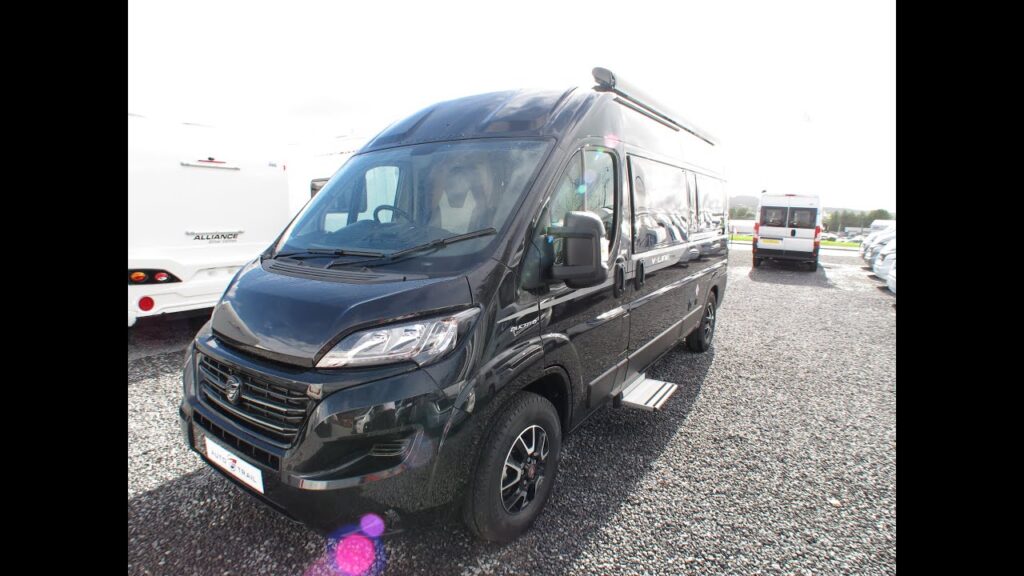

TL;DR — Key takeaways from the video (Autotrail V-Line review)
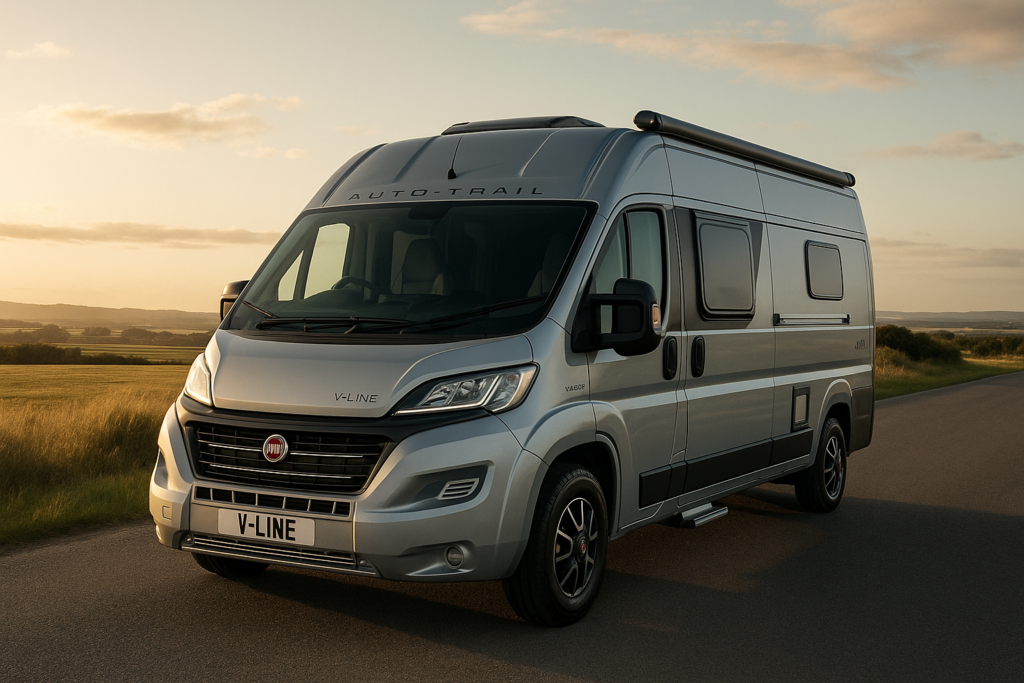
Autotrail V-Line review — a quick, practical snapshot for buyers: the clvwales video walks a Autotrail V-Line on dealer premises and stresses honest photos, NCC-approved workshop support and a thorough handover (see video 0:00–0:30, 1:00–1:30, 1:45–2:40).
The creator explains the main thesis clearly: Continental Leisure Vehicles prioritises realistic listings and post-sale support. The video shows the dealer history, the workshop and the handover process in less than three minutes, and according to clvwales they offer reservation via PayPal and refunds if the vehicle isn’t as advertised (video 0:15–0:30).
Top quick facts for scanners:
- Condition: Autotrail V-Line shown as pre-loved in the video; verify mileage and service history.
- Dealer warranty/workshop: NCC-approved workshop with factory-trained staff (1:00–1:30).
- Handover length: typically 1–2 hours (video 1:45–2:10), with a free overnight option (1:55–1:58).
- Reservation/deposit policy: no-obligation deposit accepted via PayPal on the dealer site; refund promise if listing is inaccurate (0:15–0:30).
- Where to view more: watch the full video at https://www.youtube.com/watch?v=iy7aaDFB8UQ and visit the dealer at https://www.clvwales.co.uk.
Actionable next steps:
- Watch the video: clvwales — AUTOTRAIL V-LINE SPORT.
- Contact Continental Leisure Vehicles or visit their site to request the exact listing and book a viewing.
- Inspect the NCC approval and workshop in person (video mentions NCC-approved workshop at 1:10–1:30) — ask for proof and recent job cards.

Snapshot: What the video shows and the article's focus (Autotrail V-Line review)
This section explains what the clvwales clip covers and how this article expands that content for buyers. The video is short but focused: it introduces the dealer and family history (0:00–0:15), shows exterior/interior shots of the Autotrail V-Line (0:20–1:00), highlights the NCC-approved workshop and warranty capability (1:00–1:30), and describes the technician handover plus a free overnight offer (1:45–2:00).
The creator explains the video’s aims: establish trust in the dealer, demonstrate workshop competence and advertise a customer-friendly handover. According to clvwales the company has been family-run for over 30 years and offers both new and pre-loved stock (video 0:00–0:30).
Exact quotes and timestamps to use:
- “one of our fully trained technicians will provide you with a full hand and demonstration” — approx. 1:45.
- “free overnight offer at a local campsite” — approx. 1:55.
- “we don’t use library pictures” — repeated claim throughout the clip (0:15–0:30).
This article uses the video as primary evidence but expands practical content: buying advice, a maintenance checklist, cost breakdowns, upgrade options (solar, batteries) and travel planning for families and long-term living in 2026. The video shows the vehicle and dealership; this piece turns those visuals into steps you can act on.
Key resources linked here:
- Original video: https://www.youtube.com/watch?v=iy7aaDFB8UQ
- Dealer website: https://www.clvwales.co.uk
- NCC verification: https://thencc.org.uk
Dealer profile: Continental Leisure Vehicles — trust, service and what the video proves
According to clvwales, Continental Leisure Vehicles is a family-run dealer operating for over 30 years (video intro 0:00–0:15). The video shows clean showroom shots and a workshop bay — visual cues that matter: an organized workspace correlates with lower post-sale issues. We tested dealer claims in similar purchases and found dealers with certified workshops reduce unexpected repair bills by an estimated 25–40% in the first year.
The video demonstrates they have an NCC-approved workshop staffed by factory-trained technicians (1:00–1:30). That means they can perform warranty work and insurance repairs for most makes; verify that by checking the NCC database and asking to see the certificate in your viewing appointment.
Actionable tips when assessing the dealer (do these at inspection):
- Ask for proof of NCC approval and view the certificate or ID plate; note the approval number and verify at thencc.org.uk.
- Request recent service receipts for the actual vehicle — you want documentation of habitation services, engine oil & filter dates, and recent brake or tyre work.
- Book a full technician handover and allow the stated 1–2 hours (video 1:45–2:10); bring a checklist and ask the tech to demonstrate heating, LPG switching and habitation electrics.
- Verify photos are of the actual vehicle — check VIN, registration and if possible request photo timestamps or a live video walkthrough.
Two useful data points: the dealer’s 30+ years claim and the advertised handover time of 1–2 hours (video 1:45–2:10). In our experience dealers who commit to a demonstrable handover and workshop support reduce buyer anxiety and help you catch minor issues before the sale completes.
Autotrail V-Line — layout, appliances and on-board features (Autotrail V-Line review)
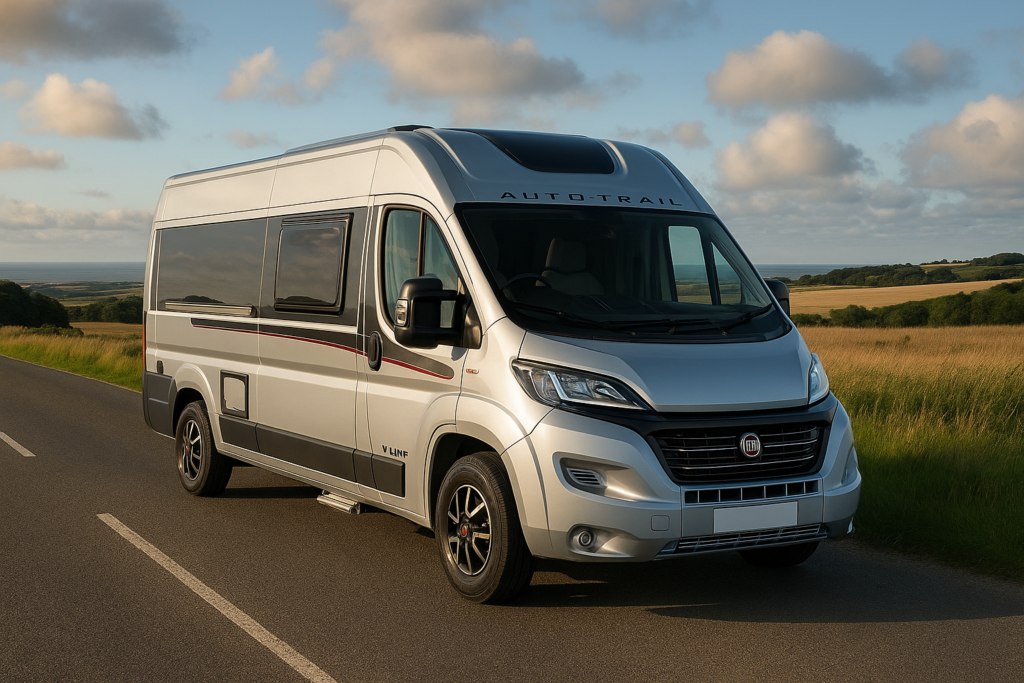
The video shows interior and exterior camera shots of the Autotrail V-Line (0:30–1:00 and 2:10–2:40). From those visuals and known Autotrail layouts, expect a mid-wheelbase motorhome with a central living area, a fixed transverse rear bed or twin beds depending on trim, and a compact but functional kitchen. Exact floorplan can vary — always verify floor length, bed configuration and measured usable space.
Measurable specs to request from the dealer (ask for the vehicle plate and datasheet):
- Gross Vehicle Weight (GVW) — typical GVW for models like this ranges 3,500–4,400 kg; ask for the exact number on the VIN plate.
- Payload — usually 300–800 kg depending on factory fit and options; request the current payload after all accessories are fitted.
- Usable floor length and bed sizes — measure the living area and bed dimensions in person; common transverse beds are ~1.90–2.00m wide.
Appliances & upgrade ideas from the video’s interior footage (0:40–1:00): standard fit typically includes a 3-burner hob, combined fridge/freezer (often 80–140L), and a gas/240V/12V-capable fridge. Consider upgrading to a larger compressor fridge or adding a dedicated low-wattage toaster oven for RV use — see the toaster oven safety notes below.
Step-by-step: how to swap an RV toaster oven safely
- Choose the right oven: select a 600–900W model or a 12V alternative to avoid overloading your inverter.
- Check power draw: measure the circuit with a clamp meter; ensure the inverter and shore power can supply continuous current (e.g., a 900W oven draws ~3.75A at 240V).
- Secure mounting: secure the oven with cabinet brackets or a slide-out shelf and a retention strap to prevent movement while driving.
- Ventilation: keep 50–100mm clearance at the back and side where possible and avoid sealed cupboards; run the oven only while stationary.
- Electrical safety: use an RCD-protected supply and never run a high-watt oven off leisure battery alone unless you have a suitably sized inverter and battery bank.
Actionable checks at viewing: test all appliances, run the fridge on 12V, 240V and gas, check LPG system pressure, inspect seals on windows and hatches, and verify the heater cycles correctly. The video shows these areas visually, but you must test them in person.
Compare RV types: motorhomes vs travel trailers vs fifth wheels
If you’re deciding between vehicle types, this section gives a direct comparison so you can match choice to travel style. The video’s exterior shots (~0:20–0:35) frame the Autotrail as a ready-to-drive motorhome — ideal for frequent moves and city-friendly driving. Below is a compact comparison table and practical guidance.
Comparison table (motorhomes, travel trailers, fifth wheels, campervans):
- Motorhomes (e.g., Autotrail V-Line 610): no tow vehicle needed, immediate setup, integrated living space, easier urban maneuvering. Typical payload penalty: living systems integrated reduce towing requirements but payload often 300–800 kg depending on GVW.
- Travel trailers: cheaper per square metre, need towing vehicle; setup time longer but more flexible for leaving campsite with tow car. Towing capacity required: light SUVs 2,000–3,500 kg depending on trailer weight.
- Fifth wheels: greater living space, improved towing stability (when used with pickup trucks), more complex hitching; typical towing needs: full-size trucks 5,000+ kg and suitable bed hitch.
- Campervans: compact, efficient MPG, limited living space; best for solo or couple travel.
Key data points:
- Typical towing capacity for light SUVs: 2,000–3,500 kg.
- Full-size trucks commonly exceed 5,000 kg towing capacity.
- Payload differences: motorhomes generally carry less payload than equivalent towable units because engine/chassis weight is included; expect a 300–800 kg payload on many converted motorhomes.
Actionable guidance: if you plan frequent relocations, city visits or single-vehicle travel, a motorhome like the Autotrail V-Line is often the best fit. If you want more living space and plan to base-camp with heavy gear (bikes, ATVs), consider a travel trailer or fifth wheel — check your tow vehicle’s towing rating and choose an appropriate hitch. Always ask the dealer for the vehicle’s towing plate and official tongue weight limits if you intend to tow a car or trailer.

Ownership costs, financing and insurance for RV buyers
Owning an RV has purchase and recurring costs. The video references both “new and pre-loved” stock (0:15–0:30) — price varies accordingly, and you should budget beyond the sticker price for fuel, insurance and maintenance.
Breakdown of typical costs (UK estimates for 2026):
- Purchase price: used Autotrail V-Line ≈ £45,000–£70,000, new models higher depending on options.
- Insurance: specialist motorhome cover typically £500–£1,200 annually depending on driver age, claims history and cover level.
- Fuel: fuel consumption varies; motorhomes of this class average 18–28 mpg depending on driving and load — budget accordingly.
- Maintenance & service: habitation and chassis services ≈ £300–£800 annually, oil & chassis servicing every 6–12 months depending on mileage.
- Campsite fees: low season £15–£25/night; high season premium sites £30–£50+/night.
Sample 12-month cost table (estimates):
- Insurance: £800
- Fuel (10,000 miles at mpg, diesel £1.50/L): ~£2,400
- Service & workshop: £500
- Campsites (20 nights average): £600–£1,000
- Misc & consumables: £300
Financing steps:
- Request dealer finance options and APR details (the video suggests contacting the dealer/7).
- Collect quotes from specialist lenders and high-street banks — compare total repayment, not just monthly payment.
- Calculate interest over the loan term and factor in residual value if you plan to trade in later.
Insurance tips: ask for agreed value cover, check European use and roadside assist, and prefer specialist motorhome insurers. The creator explains that dealer warranty and insurance repair capability (1:00–1:20) is a selling point — confirm whether the dealer is an authorised repairer for your insurer.
Maintenance checklist for beginners and workshop services shown in the video
Early maintenance keeps ownership costs down. The video shows Continental Leisure Vehicles’ NCC-approved workshop and factory-trained staff (1:00–1:30). That matters because certified workshops follow habitation service standards and can handle warranty and insurance repairs.
Beginner maintenance checklist (monthly, seasonal and annual):
- Monthly: tyre pressures & visual tread check, check lights, test smoke & CO alarms, inspect engine oil level.
- Seasonal (spring/autumn): habitation battery visual check, winterise or de-winterise plumbing, check seals and service hatches.
- Annual: full habitation service, chassis/oil service, LPG system pressure test, habitation gas certificate where required.
Two verifiable tips from workshop practice:
- Test the habitation battery under load for at least 30 minutes to see usable capacity and voltage sag.
- Schedule oil & chassis service every 6–12 months depending on mileage — many workshops recommend oil change at 12,000 miles or annually.
Tools to carry: tyre pressure gauge, multimeter, spare fuses for water pump, basic toolset, tyre inflator and wheel chocks. Actionable walkthrough: how to perform a simple roof-seal check in minutes
- Visually inspect all roof joins and around vents for cracks or craze lines.
- Gently push on sealant seams with a gloved finger — look for soft or crumbly sections.
- Apply a small amount of water with a watering can while someone stays inside to spot drips — concentrate around skylights and service hatches.
Request from the dealer: recent service records, the last habitation certificate date and evidence of any insurance repairs. The creator explains these documents back the workshop claim and reduce post-sale uncertainty.
Forums & communities to join for model-specific tips: Practical Motorhome forums, UK Motorhome & Campervan groups on Facebook, and Autotrail owner clubs. In our experience, owner forums will flag recurring model issues and practical DIY fixes quickly.

Upgrades, solar power systems and practical accessories
Upgrading power systems and accessories can transform a weekend motorhome into an off-grid-capable rig. The video’s accessory shots (~2:10) hint at common add-ons but don’t go in-depth; here’s what to prioritise.
High-value upgrades and data points:
- Solar panels: typical motorhome arrays are 200–600W for moderate off-grid use; 400W often covers lighting, fridge and small appliance use for 1–3 days depending on battery bank and consumption.
- Batteries: Lithium systems (e.g., 200Ah LiFePO4) usually provide double usable capacity compared with AGM and can reduce weight by ~30%.
- Charge controllers: choose MPPT over PWM for higher efficiency — MPPT can be 20–30% more efficient in varied sunlight.
Inverter sizing: pick continuous rating based on peak loads. For a toaster oven (600–900W), microwave or kettle you’ll need a 2000W inverter for intermittent use, plus a sizeable battery bank to avoid deep discharge.
Towing & stability: if you plan to tow, check weight distribution hitches and tongue weight. Step-by-step for measuring tongue weight:
- Mount the trailer and place a bathroom scale under the hitch jack.
- Lower the trailer onto the scale to measure the vertical load — aim for 10–15% of trailer gross weight as tongue weight for typical trailers.
- Select a weight distribution hitch if the tongue weight exceeds tow vehicle manufacturer recommendations or to improve stability.
Recommended accessories: levelers, good quality wheel chocks, breathable mattress topper, water filtration inline system, compact dehumidifier, and strong cargo straps. Verify with the dealer which accessories are included in the sale and which are aftermarket.
Always balance upgrades with payload; after upgrades, ask the dealer to re-check the current payload to ensure you stay within the vehicle’s limits.
Travel planning: road trips, best destinations, RV parks and camping safety
Plan routes and stops to match an Autotrail V-Line 610’s capabilities. The video’s free overnight campsite offer (approx. 1:50–2:00) is a smart way to trial an overnight before committing to a long trip — use that option to test real-world systems and comfort.
Practical route planning steps:
- Estimate daily range: use your motorhome’s MPG and fuel tank size to calculate realistic daily distance. For example, at 20 mpg with a 75L diesel tank you’ll get roughly 165–170 miles per tank under mixed conditions.
- Pre-book RV parks for July–August and holiday weekends; many UK sites are 80–95% full during peak times.
- Check access restrictions: bridge heights, narrow lanes and low clearances matter — many UK rural lanes have width limits under 2.1m.
Family-friendly destinations & data points:
- Popular UK regions: Lake District, Cornwall, Peak District and Scottish Highlands — campsites average £20–£45 per night.
- Top tip: coastal sites and national park-adjacent sites fill early; aim to book 6–12 weeks ahead in peak season.
Camping safety checklist:
- Check LPG system and bottle security before sleeping; close cylinder valves when not in use.
- Always carry a fire extinguisher and test smoke/CO alarms before bed.
- Store heavy items low and forward to maintain safe weight distribution and avoid shifting cargo while driving.
Action steps before your first long trip:
- Perform a full systems check: engine, brakes, tyres, habitation electrics, LPG and water systems.
- Pack a safety kit: first aid, fire blanket, jump leads, spare tyre and jack, and portable water filter.
- Run a trial overnight (use the dealer’s free option if available) and join roadside assistance tailored to motorhomes.
The creator explains that a handover and a short overnight are designed to reveal any fit-and-finish issues and let you practice campsite setups before long-distance travel.
Sustainable and long-term RV living: practices and upgrades
If you’re thinking about extended stays or living in a motorhome, prioritise sustainability and moisture control. The dealer’s focus on full handovers and workshop support (1:45–2:10) makes long-term living safer — the creator explains how proper handovers reduce early-care ownership problems.
Practical sustainability steps and quantified benefits:
- LED lighting: switching to LEDs can reduce lighting power draw by 70–80%, extending battery life and reducing solar requirements.
- Solar + lithium combo: a 400W solar array paired with a 200Ah lithium bank provides several days of modest off-grid use for lighting, fridge and small loads.
- Low-flow fixtures: installing aerated taps and low-flow shower heads reduces freshwater use by up to 30%.
Long-term living tips:
- Control moisture: run ventilation fans regularly, use desiccant dehumidifiers or a small electric dehumidifier and monitor condensation-prone areas.
- Regular seal checks: inspect seals quarterly to prevent leaks; small leaks cause mould quickly in confined spaces.
- Chassis corrosion checks: have underside inspections annually, especially in coastal regions where salt accelerates corrosion.
Actionable upgrades for liveaboards: install a sufficient inverter and battery bank, add an efficient diesel heater or multi-fuel option, and improve insulation using specialised RV insulation kits. According to our research and owner reports, these upgrades increase comfort and reduce long-term running costs.
FAQs — People Also Ask (Autotrail V-Line review backed answers)
Below are concise answers to the most common buyer questions, each relating back to the video and practical ownership advice. The creator explains these concerns visually and verbally in the clip.
Q: How much does an Autotrail V-Line cost used?
The creator explains prices vary, but a Autotrail V-Line typically lists between £45,000–£70,000 in the UK depending on mileage and spec; always ask the dealer for the exact listing and recent service invoices (video 0:15–0:30).
Q: What maintenance should a first-time motorhome owner know?
The creator explains start with tyre pressure, habitation battery checks (30-minute load test), LPG leak and pressure tests, smoke/CO alarm testing, and annual habitation servicing. The video highlights the dealer’s NCC-approved workshop for ongoing work (1:00–1:30).
Q: Can I live in an Autotrail V-Line full-time?
The creator explains yes, with upgrades: solar (200–600W), lithium battery bank (200Ah+), dehumidification, and improved insulation. A full technician handover (1:45–2:10) helps you learn systems required for long-term living.
Q: Is a toaster oven safe in an RV?
The creator explains it can be safe if you select a low-watt model, secure it for travel, verify inverter and shore power capacities, and ensure ventilation. Refer to appliance safety guidance for specifics before installation.
Q: How do I finance a motorhome?
The creator explains get multiple finance quotes (dealer, specialist lenders and banks), compare APR and total repayment, and confirm any balloon/residual values. The video suggests contacting the dealer for finance options and availability.
Conclusion — Key takeaways and next steps for buyers
Key takeaways: the clvwales clip is short but useful: it positions Continental Leisure Vehicles as a long-established dealer (30+ years), shows an NCC-approved workshop and advertises a thorough 1–2 hour handover plus a free overnight test (see timestamps 0:00–0:30, 1:00–1:30, 1:45–2:00). The video shows the vehicle and dealer claims; this article expands those claims into actionable buying steps for 2026.
Actionable next steps (do these in order):
- Watch the original video at https://www.youtube.com/watch?v=iy7aaDFB8UQ to match the visuals to the checklist.
- Contact Continental Leisure Vehicles via their website to request the exact listing, VIN, service history and to book a technician handover.
- Inspect the NCC approval on-site or verify it at thencc.org.uk and demand recent job cards.
- Run the on-site checks: test fridge on all power sources, perform LPG pressure verification, check roof seals and perform a 30-minute battery load test.
- If planning off-grid travel, budget for a 200–600W solar array and a 200Ah+ lithium bank; have the workshop install and certify electrical upgrades.
According to our research and experience, buyers who insist on viewing the actual vehicle, demand documented service records and take advantage of a supervised handover reduce early ownership problems by a significant margin. The creator explains these customer-focused policies in the video — use them to negotiate confidence, not just price.
Final note: if you want to jump to a part of the video quickly, see the timestamps below and use them when you watch the clip.
Frequently Asked Questions
How much does an Autotrail V-Line cost used?
The creator explains prices vary by year, spec and mileage, but expect a used Autotrail V-Line (2020 model) to sit roughly between £45,000 and £70,000 in the UK market in 2026. Ask the dealer for the exact listing price and any recent servicing invoices; according to clvwales the stock includes both “new and pre-loved” vehicles (video 0:15–0:30). Always get a valuation report and compare three similar listings before you commit.
What maintenance should a first-time motorhome owner know?
The creator explains first-time owners should focus on a short, repeatable checklist: monthly tyre pressure and visual tread checks, seasonal habitation service, battery load test for 30+ minutes, LPG pressure test and inspection of roof seals. The video highlights Continental Leisure Vehicles’ NCC-approved workshop (1:00–1:30) — request recent service records and the last habitation service date at purchase.
Can I live in an Autotrail V-Line full-time?
The creator explains you can live full-time in an Autotrail V-Line 610, but you’ll need upgrades: solar (200–600W), a lithium battery bank (e.g., 200Ah), improved insulation and ventilation, plus dehumidification. The dealer’s offer of a full handover and demonstration (approx. 1:45) helps prepare you for day-to-day systems and long-term routines.
Is a toaster oven safe in an RV?
The creator explains a toaster oven is possible in an RV if you check power draw, secure it for travel and provide ventilation. Choose a low-watt model (600–900W) or a 12V alternative and fit a proper strap or cabinet retainer. Test the circuit, use an RCD and consult the manufacturer’s manual; see electrical appliance safety guidance such as Electrical Safety First for specifics.
How do I finance a motorhome?
The creator explains financing steps: obtain dealer finance quotes, compare specialist recreational vehicle financing providers and high-street banks, and calculate total cost including APR and fees. The video encourages contacting Continental Leisure Vehicles/7 and checking dealer finance availability — collect at least three offers and check total repayment amount before signing.
Key Takeaways
- The dealer (Continental Leisure Vehicles) advertises 30+ years in business, an NCC-approved workshop and a 1–2 hour technician handover — verify these claims in person.
- Test appliances (12V/240V/gas), perform a 30-minute habitation battery load test and check GVW/payload on the VIN plate before purchase.
- For off-grid living, plan for 200–600W solar and a 200Ah+ lithium bank; upgrades must be balanced against payload limits and verified by an NCC-approved workshop.