
?Ready to plan your RV adventure through Utah’s spectacular canyons, red-rock arches, and peaceful desert skies?


Why Utah should be on your RV itinerary
Utah is one of the best states for RV travel because it packs a mind-bending variety of landscapes into compact driving distances. You’ll find towering hoodoos, sculpted sandstone fins, wide salt flats, high alpine lakes, and abundant BLM (Bureau of Land Management) land for dispersed camping. With a well-planned route and the right gear, you can go from star-filled desert nights to mountain forests in a single day.
This guide breaks down the must-visit RV camping destinations in Utah, what to expect at each place, practical tips for RVers, reservation and permit notes, and sample itineraries so you can make the most of your time.
How to pick the right RV destinations for your trip
Before you begin packing, think about what you want most from the trip: scenic drives and overlooks, hiking and technical routes, mountain lakes, family-friendly campgrounds, or off-grid boondocking. Also consider your RV length, towing setup, and your comfort level with dirt or narrow roads. Seasons matter—summer is hot in the desert, spring and fall are busiest, and winter brings snow to the high elevations.
Key selection factors:
- Distance between sites and fuel stops
- Road access and vehicle size restrictions
- Availability of hookups vs. boondocking
- Cell coverage and services (groceries, propane, mechanics)
- Park reservation policies and permits
Quick reference: Must-visit RV camping destinations (overview)
The table below gives a high-level snapshot of the most popular RV camping destinations across Utah, what makes each special, typical amenities, best season, and a quick tip.
| Destination | Highlights | Amenities (typical) | Best season | Quick tip |
|---|---|---|---|---|
| Zion National Park (Springdale) | Dramatic canyon walls, hiking, scenic drive | NPS campgrounds (limited hookups), private RV parks in town | Spring-Fall | Book early; shuttle season can limit vehicle access inside the canyon |
| Bryce Canyon National Park | Hoodoos, night sky viewing, rim trails | NPS campgrounds (no hookups), nearby private RV parks | Spring-Fall | Higher elevation—cool nights; winter snows create striking contrasts |
| Arches National Park (Moab) | Natural arches, short hikes, red rock landscapes | Devils Garden Campground (no hookups), many private parks in Moab | Spring-Fall | Moab is RV-friendly with services; expect crowds in high season |
| Canyonlands National Park | Island in the Sky, Needles district, remote viewpoints | Campgrounds in park; dispersed BLM near Moab | Spring-Fall | Multiple districts are far apart—plan logistics |
| Capitol Reef National Park (Fruita) | Scenic drives, Fruita orchards, Waterpocket Fold | Fruita Campground (no hookups) | Spring-Fall | Charming small town (Torrey) nearby for supplies |
| Kodachrome Basin & Grand Staircase-Escalante | Hoodoos, slot canyons, backcountry roads | State park campgrounds (some hookups) | Spring-Fall | Many unpaved access roads—check vehicle restrictions |
| Goblin Valley State Park | Strange rock formations, family-friendly | State campground (basic amenities) | Spring-Fall | Excellent for kids; nearby BLM for dispersed camping |
| Coral Pink Sand Dunes State Park | Sand dunes for sliding and photo ops | State campground (basic) | Spring-Fall | Windy at times—sand can be abrasive; secure awnings |
| Bear Lake State Park | Turquoise water, beaches, summer water sports | State park campgrounds, some hookups | Summer | Great family destination; warm summer nights |
| Flaming Gorge NRA | Reservoir, fishing, scenic byways | Marina campgrounds, dispersed options | Summer-Fall | Cooler mountain temperatures; great for fishing |
| Antelope Island State Park | Great Salt Lake vistas, bison | Small campground (limited) | Spring-Fall | Can get windy; easy day trip from Salt Lake City |
| San Rafael Swell | Remote canyon country, little traffic | BLM dispersed camping | Spring-Fall | Excellent boondocking, but rough roads and limited services |

Southern Utah — The big three plus regional gems
Southern Utah is where most visitors head because it contains the “Mighty 5” national parks (Zion, Bryce Canyon, Capitol Reef, Arches, Canyonlands) and abundant state parks. This region is also set up well for RVers, with several private RV parks offering full hookups, laundry, and Wi‑Fi.
Zion National Park and Springdale
Zion is famous for its immense sandstone walls and iconic hikes like Angel’s Landing and The Narrows. You’ll camp under towering cliffs and travel through one of the most photogenic canyons in the country.
- Campgrounds: Watchman Campground and South Campground are inside/near the park. Many sites are first-come/first-served at certain times, while others require reservations—check the NPS site.
- RV considerations: Some canyon roads are narrow and steep. Park vehicle restrictions apply on certain roads and shuttle systems operate seasonally. If you have a large RV, consider staying in Springdale at a private RV resort with full hookups and shuttle access.
- Nearby services: Springdale has grocery stores, restaurants, and RV-friendly businesses.
Bryce Canyon National Park and nearby Panguitch/Ruby’s Inn
Bryce’s amphitheaters of hoodoos glow at sunrise and sunset. The rim trail offers dramatic, easy-to-access viewpoints.
- Campgrounds: North and Sunset campgrounds in the park. Ruby’s Inn RV Park is the large private option with full hookups and amenities.
- RV considerations: Higher elevation (~8,000–9,000 ft) means cooler nights and possible snow even in shoulder seasons. Tank antifreeze and insulated hoses are wise in shoulder months.
Capitol Reef National Park and Torrey
Capitol Reef is quieter than Zion or Bryce but offers unique geology, historic orchards, and scenic drives like the scenic byway and Cathedral Valley.
- Campgrounds: Fruita Campground is the primary park campground with a relaxed, shaded setting near orchards.
- RV considerations: Scenic drives may have side roads with rough surfaces—check conditions for oversized rigs.
Moab — Arches and Canyonlands
Moab is the RV hub for Arches and Canyonlands visitors. You’ll find plenty of private RV parks, full services, and BLM areas for dispersed camping.
- Arches (Devils Garden Campground): Located inside the park, this campground is popular—no hookups but offers a great location. Reserve if possible.
- Canyonlands (Needles & Island in the Sky): Separate districts with unique scenery; Needles campground and others are primitive.
- Off-road access: Many incredible roads and trails (Hell’s Revenge, Fins and Things) are 4×4/ATV-only. If you plan to boondock, learn BLM rules and be prepared for sandy or rocky conditions.
Grand Staircase-Escalante and Kodachrome Basin
This region is quieter, with slot canyons, long scenic drives, and state parks that are RV-friendly.
- Kodachrome Basin State Park: Offers RV campsites with hookups in a beautiful setting.
- Grand Staircase-Escalante National Monument: Many side roads and trailheads; some are priority for high-clearance vehicles.
- Tips: Cell service is spotty. Carry maps and a spare tire.
Coral Pink Sand Dunes and Goblin Valley
Family-friendly and unforgettable landscapes—sand dunes that shift with the wind, and goblin-like sculpted rocks.
- Campgrounds: State park sites are simple but scenic. Nearby towns often have full-service RV parks.
- Recreation: Dune buggy access in Coral Pink; photography and scrambling in Goblin Valley.
Northern and Eastern Utah — Lakes, folds, and red-rock continuity
While Southern Utah gets the most attention, Northern and Eastern Utah have unique draws worth including if you’re doing a longer loop.
Bear Lake (Northern Utah)
Called the “Caribbean of the Rockies” for its turquoise water, Bear Lake is a magnet in summer for boating and beaches.
- Campgrounds: State park campgrounds with basic hookups. Family-friendly with good services.
- Tip: Summer weekends are busy—reserve early.
Flaming Gorge National Recreation Area (Northeast)
A dramatic reservoir carved through canyon walls, great for fishing and scenic drives.
- Campgrounds: Marinas and U.S. Forest Service sites, many boondocking options.
- Tip: Cooler temperatures due to elevation; bring thermal layers in shoulder seasons.
Antelope Island State Park / Great Salt Lake
Close to Salt Lake City, Antelope Island offers wild bison herds, shoreline views, and easy RV access.
- Camping: Small campground with basic amenities. It’s ideal for a short stay if you’re passing through Salt Lake City.
San Rafael Swell and the Little Grand Canyon
The Swell is a boondocker’s dream—wide-open BLM areas, slickrock, and remote canyons.
- Camping: Mostly dispersed BLM camping. Expect no services; pack it in/pack it out.
- Vehicle considerations: Many access roads are rough or sandy—suitable for high-clearance or 4×4.
State & lesser-known parks that are RV-friendly
Some state parks are surprisingly excellent for RVers and less crowded than the national parks.
- Kodachrome Basin State Park (see above)
- Coral Pink Sand Dunes State Park
- Goblin Valley State Park
- Dead Horse Point State Park (near Canyonlands) — spectacular overlooks and a well-maintained campground
- Sand Hollow State Park (near St. George) — water sports and RV sites with hookups
- Snow Canyon State Park (near St. George) — red Navajo sandstone and lava flows, limited RV camping but great for short stays
BLM and dispersed camping — freedom with responsibility
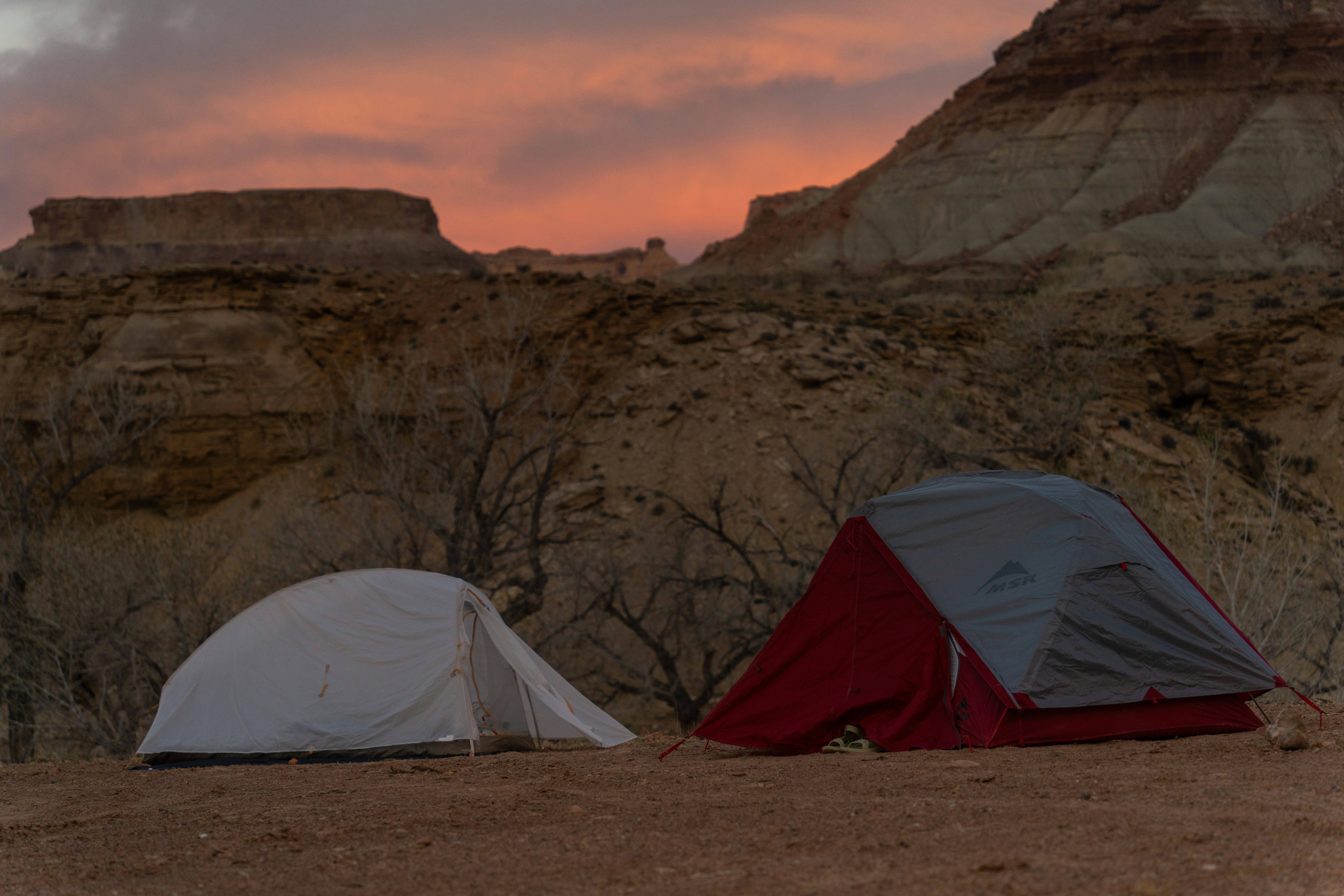
Utah has vast public lands managed by BLM where dispersed camping is allowed. These areas give you solitude and the chance to park for free, often near stunning backcountry.
Key rules and considerations:
- Stay on durable surfaces (existing campsites or dirt roads) to avoid vegetation damage.
- Check for restrictions and fire bans. Many areas prohibit campfires in dry seasons.
- Respect cultural sites and petroglyphs—don’t touch or collect artifacts.
- Pack out trash and human waste if no vault toilets exist.
- Be self-sufficient: bring potable water, sufficient fuel, and a reliable spare tire.
Reservations, permits and seasonal closures
National and state parks use reservation systems differently and frequently update policies. Use official sources (NPS, Utah State Parks, BLM) to confirm.
- Zion, Bryce, Arches, and other parks may require reservations or timed-entry permits during high season.
- Some scenic drives (like those on private or state-managed lands) may have seasonal closures due to weather.
- Backcountry permits may be required for overnight hikes or specific areas (e.g., The Wave is in Arizona but similar places in Utah require permits).
- If you plan to run a generator, check campground quiet hours and rules.
Table — Reservation and permit guide (generalized)
| Area | Likelihood of reservation requirement | Notes |
|---|---|---|
| Zion NP | High (peak season) | Shuttle/timed entry may be in effect |
| Bryce Canyon NP | Medium | Campground reservations recommended |
| Arches NP | Medium-High | Devils Garden often fills quickly |
| Canyonlands NP | Medium | Separate districts have separate rules |
| State parks (Kodachrome, Coral Pink) | Medium | State systems often require reservations |
| BLM dispersed areas | Low | No reservations, but limited services |
Always check specific park websites for the most current rules.
RV size, road access, and towing considerations
Some Utah roads are narrow, steep, or winding—especially scenic byways and canyon approaches. Before you head out:
- Confirm maximum RV lengths for park entrances and narrow roads.
- If you tow a vehicle, anticipate tight pull-throughs for some campgrounds.
- Consider leaving large rigs in town and taking a smaller vehicle into narrow canyon roads when possible.
- If you plan on unpaved routes (Hole-in-the-Rock Road, Burr Trail, Capitol Reef side roads), verify whether they’re suitable for your RV. Many of these require high-clearance or 4WD and can be dangerous when wet.

Cell coverage and connectivity
Cell service varies widely. Southern Utah and Moab offer decent coverage in town, but inside many parks and on backcountry roads service is limited or non-existent. If remote connectivity is important:
- Consider a mobile hotspot with an external antenna.
- Download maps offline and carry paper backups for critical directions.
- Inform someone of your itinerary if you’ll be out of cell range for extended periods.
Dump stations, potable water, and propane
Plan your service stops:
- Many state parks offer potable water and dump stations; private RV parks typically do.
- Some remote BLM sites and small state parks may not offer dump stations—know where the nearest one is.
- Refill propane in towns like Moab, Springdale, Torrey, and Panguitch; secure a spare tank if you rely heavily on propane.
Wildlife, fire safety, and environmental considerations
Utah’s wildlife ranges from deer and bighorn sheep to coyotes and small desert critters.
- Store food securely to avoid attracting animals.
- Observe wildlife from a distance.
- Fire safety: check current restrictions—many areas ban open fires in drought conditions. Use established fire rings where permitted.
- Leave No Trace: pack out trash, minimize campfire impact, and respect fragile desert crusts and vegetation.
Practical packing checklist (table)
This checklist helps you prepare for varied Utah conditions.
| Category | Essentials |
|---|---|
| Documents & planning | Park reservations, vehicle registration, insurance, maps, printed directions |
| Safety | First aid kit, tire repair kit, jumper cables, fire extinguisher, reflective triangle |
| RV basics | Freshwater hoses, water pressure regulator, sewer hose + fittings, tank treatments, extra wheel chocks, leveling blocks |
| Tools & maintenance | Basic tool kit, extra fuses, spare bulbs, travel jack, lug wrench, spare fluids |
| Weather & comfort | Layers for hot days and cold nights, sun protection, rain gear, insulated water hoses (cold months) |
| Kitchen & camping | Portable grill, camp chairs, lantern/headlamps, cooler, reusable water bottles |
| Off-road & backcountry | High-clearance vehicle or 4×4 if needed, recovery gear, satellite comm device for very remote areas |
| Recreation | Binoculars, camera, star chart app, hiking boots, daypacks, trekking poles |
| Misc | Trash bags, biodegradable soap, toilet paper for backcountry, hand sanitizer |
Sample RV itineraries
Here are two sample itineraries tailored to different trip lengths. You can adjust stops and pace based on the amount of driving you want to do each day.
7- to 10-day Southern Utah highlights loop
- Day 1: Arrive in Springdale/South Zion — set up at a private RV park or Watchman Campground.
- Day 2–3: Hike Zion trails (Angel’s Landing if you have permits/comfort; Riverside Walk, The Narrows). Rest.
- Day 4: Drive to Bryce Canyon — stop at viewpoints along the way. Camp at Ruby’s Inn or park campground.
- Day 5: Sunrise at Bryce, then head to Kodachrome Basin or Grand Staircase area for fewer crowds.
- Day 6: Drive to Capitol Reef (Torrey area). Camp near Fruita.
- Day 7: Scenic drives and short hikes in Capitol Reef. Head to Moab if time allows.
- Day 8–10 (optional): Moab area for Arches and Canyonlands; plan 1–2 days for each park.
2-week comprehensive Utah loop
- Start in Salt Lake City: Antelope Island day trip.
- Head northeast for Flaming Gorge (1–2 nights).
- Travel south through San Rafael Swell for dispersed camping, then to Capitol Reef.
- Continue to Bryce and Kodachrome Basin.
- Spend several days in the Moab region (Arches, Canyonlands, off-roading).
- Finish in Zion and then return to Salt Lake or head onward to either Nevada or Arizona.
Tips for driving, camping etiquette, and generator use
- Drive cautiously: watch for wildlife and changing light conditions; sandstone can be slippery when wet.
- Generator etiquette: run in allowed hours only—many campgrounds enforce quiet hours starting around 9–10 pm.
- Keep campsite tidy and compact—leave picnic tables as you found them and pack out charcoal and trash.
- Respect others’ privacy; choose a site with an adequate buffer and keep noise low.
Road-specific notes and cautionary points
- Hole-in-the-Rock Road (GSENM): A spectacular but rough route — check conditions before committing. Some segments are soft sand, steep, or rocky.
- Burr Trail: Offers incredible scenery but narrow stretches and steep drops; check conditions and avoid in high water.
- Scenic drives into parks can have tight switchbacks—if you’re towing a car, choose pull-through sites or park off-site.
Weather and seasonal considerations
- Spring/Fall: Usually ideal temperatures for hiking and camping. Nights can be cool; pack layers.
- Summer: Very hot in low-elevation desert areas (Zion floor, Moab). Plan hikes early or late in the day, and stay hydrated.
- Winter: Many high-elevation roads and trails (Bryce, parts of Capitol Reef) may have snow. Some camps close seasonally; cold-weather gear and antifreeze for holding tanks are essential.
Where to get supplies and services
- Towns to remember for services: Moab, Springdale (Zion), Torrey (Capitol Reef), Kanab (near Coral Pink), Panguitch and Bryce Canyon City (near Bryce), Green River (fuel between Moab and Capitol Reef).
- Major repair shops and RV service centers are concentrated in Moab and larger towns—carry contact info and a backup plan.
Final safety and planning checklist before you go
- Confirm all park and campground reservations; print confirmation numbers.
- Verify campground rules (generator times, pet rules, fire rings, maximum RV length).
- Check current road conditions and weather forecasts.
- Fill propane and top off diesel/gas before heading into remote areas.
- Carry extra water and food for at least 48 hours beyond your plan in case of delays.
Closing notes — make it yours
You’ll get the most from Utah by balancing popular parks with quieter corners. Mix busy, photographed spots with a few nights of dispersed camping for stargazing and solitude. Plan for the practicalities—reservations, water, and road access—and you’ll be free to enjoy one of the most varied and dramatic landscapes you can reach by RV.
If you tell me your travel window, the size of your RV, and whether you prefer more developed campgrounds or backcountry boondocking, I can help build a detailed day-by-day itinerary and provide campground reservation links and road-condition checks specific to your dates.