?Thinking about upgrading your RV climate control with the TOSOT 16000 BTU GO Cool RV Air Conditioner, Non-Ducted Camper Rooftop AC Unit with Heat Pump, WiFi and Remote Control, Quiet Air Conditioner for Campers & Trailers, White to keep your trips comfortable year-round?

Overview of the TOSOT 16000 BTU GO Cool RV Air Conditioner
You’ll find this rooftop unit advertised as a powerful and versatile option for campers and trailers. It combines a strong cooling output with a heat pump for heating, smart WiFi control, and a non-ducted design that fits common RV rooftop vent openings.
What this product promises
You can expect up to 16,000 BTU cooling capacity and about 12,500 BTU of heating capacity, which the manufacturer says will cover larger RV interiors. The unit also touts quiet operation, smartphone control via the free Gree+ app, and compatibility with standard 14.25″ x 14.25″ rooftop vent openings.

TOSOT 16000 BTU GO Cool RV Air Conditioner, Non-Ducted Camper Rooftop AC Unit with Heat Pump, WiFi and Remote Control, Quiet Air Conditioner for Campers & Trailers, White
Key Specifications at a Glance
Here’s a concise breakdown so you can quickly compare the headline specs without hunting through the product page. Use this to confirm compatibility with your RV and power setup before you buy.
| Feature | Specification |
|---|---|
| Model | TOSOT 16000 BTU GO Cool RV Air Conditioner (Non-Ducted, Heat Pump) |
| Cooling Capacity | 16,000 BTU |
| Heating Capacity | 12,500 BTU (heat pump) |
| Suggested Coverage | Up to ~600 sq ft (manufacturer estimate) |
| Compatible RV Length | Roughly 16–24 ft (varies with insulation and layout) |
| Operational Outdoor Temp Range | 23°F to 115°F |
| Indoor Temp Range | 61°F to 86°F |
| Vent Opening Fit | Standard 14.25″ x 14.25″ rooftop vent |
| Ductwork | Non-ducted / ductless (not compatible with RVs that have ductwork) |
| Included | Sealing material, 5.3-inch bolt for ceiling assembly |
| Control Options | WiFi via Gree+ app, remote control, onboard controls |
| Shipping | Units may ship in multiple packages or on pallets |


Performance Overview
You’ll want to know not just the specs but how the unit actually performs day to day. This section covers cooling and heating performance, noise, and efficiency so you can picture what life will be like inside your RV with the unit running.
Cooling Power and Realistic Expectations
With 16,000 BTU on tap, the unit should cool typical mid-size RV interiors quickly when outdoor temperatures are within the specified range. Keep in mind that RV layout, insulation quality, shade, and number of occupants all affect how fast and how well it cools; you might see shorter run times in mild weather and longer cycles during heat waves.
Heating Capability and Limitations
The heat pump provides a backup heating option with roughly 12,500 BTU of output, which is great for mild to moderate cold conditions. If you plan to spend time below freezing frequently, you should treat the heat pump as an auxiliary rather than a full winter heating system; you may still need a supplemental propane or electric heater in very cold climates.
Noise Levels and Quiet Operation
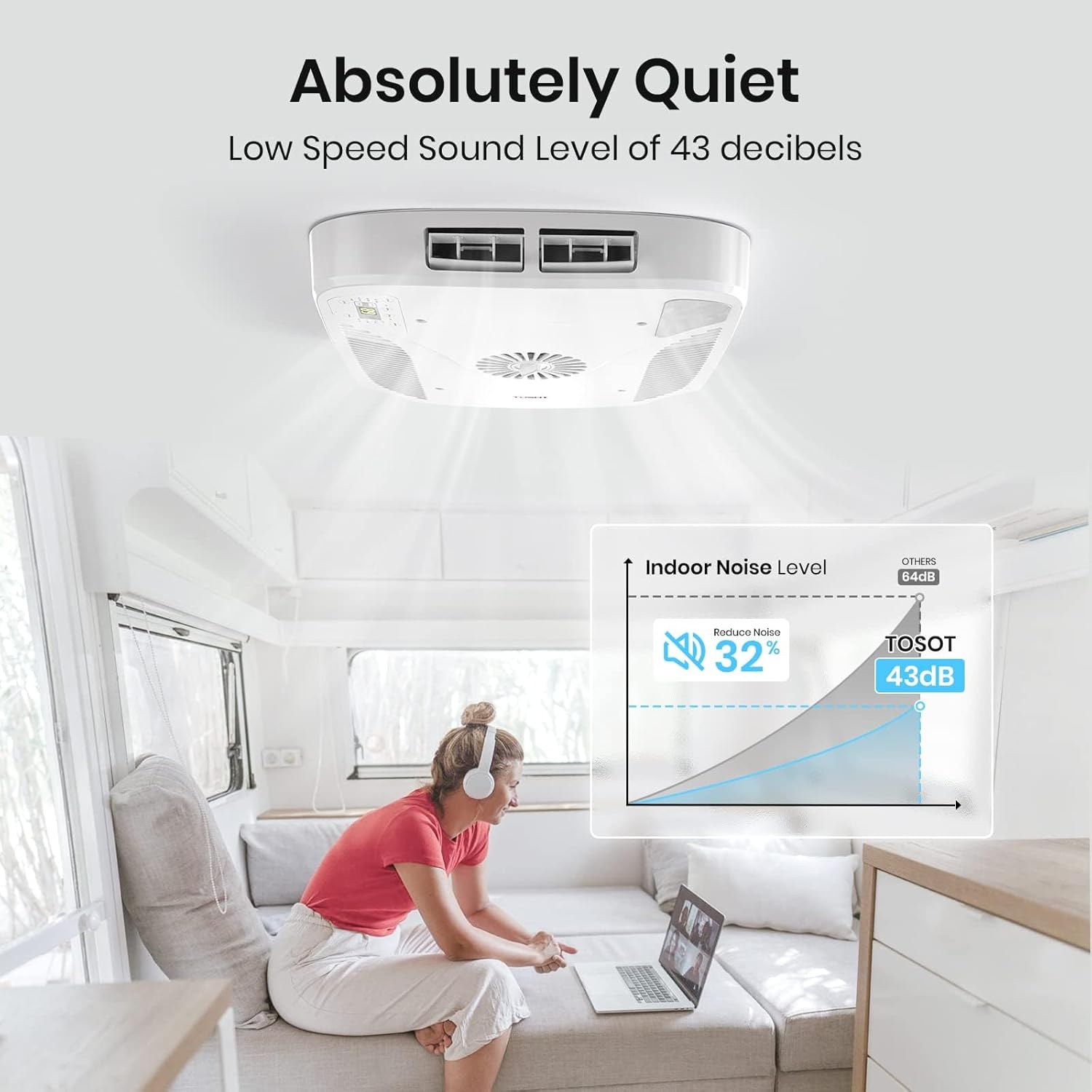
TOSOT markets this unit as quiet, and many users report pleasantly low noise levels compared with older rooftop units. Expect some fan and compressor noise when the unit cycles, but it should be tolerable for sleeping and conversation when running at moderate speeds.
Efficiency and Power Use
You’ll save more energy compared with older, less efficient rooftop units thanks to modern compressors and control features, but running a 16,000 BTU unit still draws a substantial current. If your RV’s electrical system or campsite shore power is limited, you’ll want to check amp draw and consider power management (generator, upgraded pedestal, or shore power) to avoid tripping breakers.
Installation and Compatibility
Installing a rooftop air conditioner is a major step, and you’ll appreciate a unit designed to fit common openings and be relatively straightforward to mount. This section helps you confirm whether the TOSOT 16000 BTU GO Cool will physically and electrically fit your rig.
Rooftop Fitment and Dimensions
The unit is designed to fit a standard 14.25″ x 14.25″ rooftop vent opening that many RVs already have, which simplifies compatibility checks. Because of the non-ducted configuration, it sits on top of that opening and blows air directly into the interior, so you won’t need to integrate it into existing ducts.
Non-Ducted (Ductless) Design and What That Means
You should be aware that this is a ductless rooftop unit—if your RV has a ducted system, this model won’t fit or function correctly without major modification. The non-ducted design is ideal for many campervans, pop-ups, and trailers that simply vent directly into the living space.
Included Accessories and What You’ll Need
A sealing kit and a 5.3-inch bolt for ceiling assembly are included to help you secure the unit during installation and ensure a tight seal with roof thicknesses between 1.2″ and 3.1″. You’ll still want to have common tools on hand and verify that your roof can support the unit; in some cases, a professional rooftop installer or RV service center is recommended for safety and warranty compliance.

Smart Features and Controls
You’ll enjoy modern control options that make it easy to operate the AC from inside or remotely. This section details WiFi control, app features, and conventional remote operation.
WiFi Control with the Gree+ App
With built-in WiFi, you can manage temperature, fan speeds, and scheduling from your smartphone via the Gree+ app, making it easier to pre-cool or pre-heat your RV before you arrive. You’ll appreciate being able to check status and adjust settings while out running errands or relaxing outside.
Remote Control and Onboard Controls
A handheld remote is included, and onboard controls allow you to operate the unit directly at the head unit. These multiple control methods give you flexibility so you’re not forced to use the app if you prefer physical controls or are in a location without internet access.
Use Cases and Suitability
Not every RV or traveler needs the same features. This section helps you decide if this TOSOT unit matches your travel style and living situation.
Best RV Sizes and Layouts
The manufacturer suggests the 16,000 BTU model suits RVs roughly 16–24 feet long and interiors up to about 600 sq ft—figures that depend heavily on insulation and layout. If you have an open-plan layout or multiple slide-outs, you’ll get better results; small, well-insulated trailers might find the capacity a bit overpowered unless you like ultra-fast temperature control.
Seasonal and Climatic Suitability
Because it can operate in outdoor temperatures from 23°F to 115°F, this unit covers most seasonal uses from cool shoulder seasons through high-heat summer conditions. If you expect frequent subfreezing conditions during winter months, plan for supplemental heating because the heat pump will lose efficiency at extreme low temperatures.
When Not to Choose This Unit
You should avoid this model if your RV already has ductwork that you want to keep, or if your rooftop vent is non-standard and not the 14.25″ size. Also, if you require a built-in solution that distributes air through ducts to multiple rooms, a ducted rooftop system or interior-dedicated heat source would be a better fit.
Installation Tips and Prep
You’ll get a smoother installation if you prepare the roof, electrical system, and tools beforehand. This section gives practical suggestions to reduce surprises and protect your RV.
Tools and Materials You’ll Likely Need
Have a caulk gun, lap sealant or butyl tape recommended by the manufacturer, screwdrivers, ratchet set, and possibly a power drill for mounting bolts. Bring safety equipment—gloves, eye protection, and a stable ladder—especially for roof access.
Sealing and Roof Integrity
A watertight seal is essential—use the provided sealing materials and consider replacing any old roof sealant or flange gaskets before mounting. After installation, check for leaks after the first rain and re-seal as necessary to protect against water intrusion.
Electrical Requirements and Power Considerations
Confirm your RV’s electrical service can handle the AC’s startup and running amps; many 50A RVs handle a 16,000 BTU unit without issue, but 30A systems may struggle. If you’ll run on campsite pedestals, verify that the pedestal amperage and wiring are adequate, and consider running a generator or power management system if you anticipate heavy simultaneous loads.
Maintenance and Longevity
Your unit will perform best with routine care, and minor maintenance tasks can prevent expensive repairs. This section covers what you should check regularly and what to expect over the lifespan.
Regular Maintenance Tasks
You’ll want to clean or replace filters regularly depending on use and dust levels, check for debris in intake/exhaust areas, and ensure the condensate drainage path is clear. Annual checks of refrigerant levels and electrical connections by a qualified technician will help maintain efficiency and extend the unit’s life.
Troubleshooting Common Issues
If the unit won’t start, check breakers and the shore power first; many issues are simply electrical. For persistent problems—strange noises, poor cooling, or refrigerant issues—contact a qualified RV HVAC technician rather than attempting advanced repairs yourself to avoid warranty voids or safety risks.

Pros and Cons
You’ll likely find both strengths and trade-offs when weighing this TOSOT rooftop AC against other options. These lists highlight the main benefits and potential downsides to help you make a balanced decision.
You’ll appreciate the modern features and powerful output, but you’ll also need to consider electrical requirements and the non-ducted limitation. Pros:
- Strong 16,000 BTU cooling that works well for mid-sized RVs.
- Heat pump provides year-round comfort in mild to moderate conditions.
- WiFi and remote control for convenient operation.
- Fits standard 14.25″ x 14.25″ roof openings, simplifying installation on many rigs.
- Included sealing material and mounting bolt reduce the need for extra purchases.
Cons:
- Not compatible with RVs that use ducted systems without significant modification.
- Heat pump efficiency drops in very cold weather; supplemental heating may be required.
- Startup current can be high; smaller electrical systems may struggle without upgrades.
- Potential for multiple-package shipping adds coordination for delivery.
Real-World Performance: Scenarios and Examples
You’ll get a clearer sense of how this unit performs by imagining common travel scenarios and how the AC responds.
Summer Road Trip in Hot Regions
When you park at a shady site in the afternoon, the 16,000 BTU unit should drop interior temps quickly, and the app lets you start cooling before you return. Expect the compressor to run more steadily during peak heat, so monitor your power source if you’re on limited shore power or generator time.
Weekend Camping in Mild Weather
For shorter, cooler trips, you can run the unit at lower fan speeds to maintain comfort without heavy power draw. The heat pump is handy for chilly nights in spring or fall, offering gentle warmth without propane.
Full-Time Living and Extended Stays
If you plan to live in your RV for long stretches, the unit’s modern components and smart controls are attractive for lifestyle comfort, but you’ll want to set up a robust electrical plan and stay on top of maintenance. Consider pairing the unit with solar + battery backup or a high-capacity generator for reliable off-grid operation.

What You Get in the Box and Shipping Notes
You’ll receive the main unit plus a sealing material and a bolt for ceiling assembly to help with immediate installation. Be aware that the manufacturer notes units may ship in multiple packages or on pallets and possibly at different times, so arrange delivery logistics accordingly to avoid installation delays.
Packaging and Delivery Considerations
Because heavy HVAC units may arrive in separate boxes, you should coordinate receipt and inspect all packages for damage before signing. Hold onto packaging until you’ve verified everything is present and undamaged to simplify returns or warranty claims if necessary.
Warranty, Support, and Service
You’ll want to factor in warranty coverage and the availability of service when making a purchase decision. Warranty terms can vary, so check the exact length and conditions in your purchase documentation, and register the product if required.
Manufacturer Support and Spare Parts
TOSOT provides customer support channels and may offer replacement parts through dealers or service centers; having a reputable installer or local RV tech partner can speed up repairs. If you rely on your RV for travel or full-time living, identify nearby service options and confirm component availability before long trips.
Price Considerations and Value
You’ll pay for features, capacity, and the convenience of modern controls; the TOSOT 16000 BTU GO Cool positions itself as a value option compared with brand-new OEM replacements that can be pricier. Factor in installation costs, possible electrical upgrades, and any additional roof work when calculating total outlay.
Is it worth the cost for your situation?
If you frequently camp in hot weather or live in your RV part-time and want the convenience of WiFi control plus both cooling and heating capability, this unit offers a competitive mix of power and features. If your RV is small, or you rarely use AC, you might find a smaller, less expensive unit sufficient.
Comparison with Alternatives
You’ll want to compare capacity, features, and compatibility against other rooftop models before you buy. This section gives you general guidance on how this TOSOT stacks up to common alternatives.
Versus Smaller 13,500–15,000 BTU Units
The 16,000 BTU model gives you extra cooling headroom that translates to faster temperature drops and better performance in hotter climates. You’ll trade slightly higher power draw and weight for that added capability.
Versus Ducted Rooftop Systems
Ducted systems distribute air more evenly through vents and can work better in larger, more compartmentalized rigs, but they require specific ductwork compatibility. If your RV already has ducts, you’ll likely prefer a ducted unit or maintain the OEM system unless you plan a full retrofit.
Versus Portable or Split Systems
Portable units and interior split systems avoid rooftop installation but often sacrifice match with RV aesthetics and can be less efficient. Rooftop units like the TOSOT keep the living area uncluttered and usually provide better overall airflow for full RV interiors.
Troubleshooting and FAQs
You’ll likely have questions once you start using the AC; this section addresses common issues and quick checks to resolve them.
If the AC Won’t Start
Check breakers and shore power first; many non-start issues are power-related. Ensure the remote or app is communicating and that any built-in safety timers (like a compressor delay) have elapsed.
If Cooling is Weak
Confirm filters are clean and outdoor temperatures aren’t exceeding the unit’s effective operating range. Verify the unit isn’t short-cycling due to thermostat placement or mismatched settings.
If Heating is Insufficient
Remember the heat pump’s limitations in very cold weather; supplemental heating may be necessary. Check the mode settings and ensure the system is defrosting properly if you notice icing and reduced output.
Safety Notes and Best Practices
You’ll want to follow common-sense safety steps during installation and use to avoid injury or damage to your RV. Always follow the manufacturer’s installation guide and, when in doubt, hire a professional.
Roof Work and Lifting Safety
Working on rooftops involves fall risk; use a stable ladder and have a helper on the ground to hand tools and hold the ladder. Because these units are heavy and bulky, two or more people are typically needed to lift and position the unit safely.
Electrical Safety
Turn power off at the breaker before any electrical work, and avoid DIY electrical modifications beyond your competence. If your RV needs a service panel upgrade to support the AC, use a qualified electrician or RV technician.
Final Verdict
You’ll find the TOSOT 16000 BTU GO Cool RV Air Conditioner to be a compelling option if you want a high-capacity, feature-rich rooftop unit that handles both cooling and heat pump heating. It’s particularly attractive for mid-sized RVs and travelers who value WiFi control and modern efficiency—just confirm roof compatibility and electrical capacity before purchasing.
Who should buy it
If you’re running a mid-sized trailer or motorhome and you need robust cooling with convenient smart controls, this unit fits well. If you have extreme cold-weather needs, plan for supplemental heat, but for a broad range of camping conditions, it’s a strong contender.
Final tips before you buy
Measure your rooftop vent opening and assess your RV’s electrical system, and consider professional installation for best results. Keep maintenance routine and plan for safe delivery handling since components may arrive in multiple packages.
If you want, you can tell me your RV model, roof vent measurements, and electrical setup and I’ll help you confirm compatibility and suggest installation next steps tailored to your rig.

Disclosure: As an Amazon Associate, I earn from qualifying purchases.