Looking for an easier way to stabilize your RV without cranking for every stop?
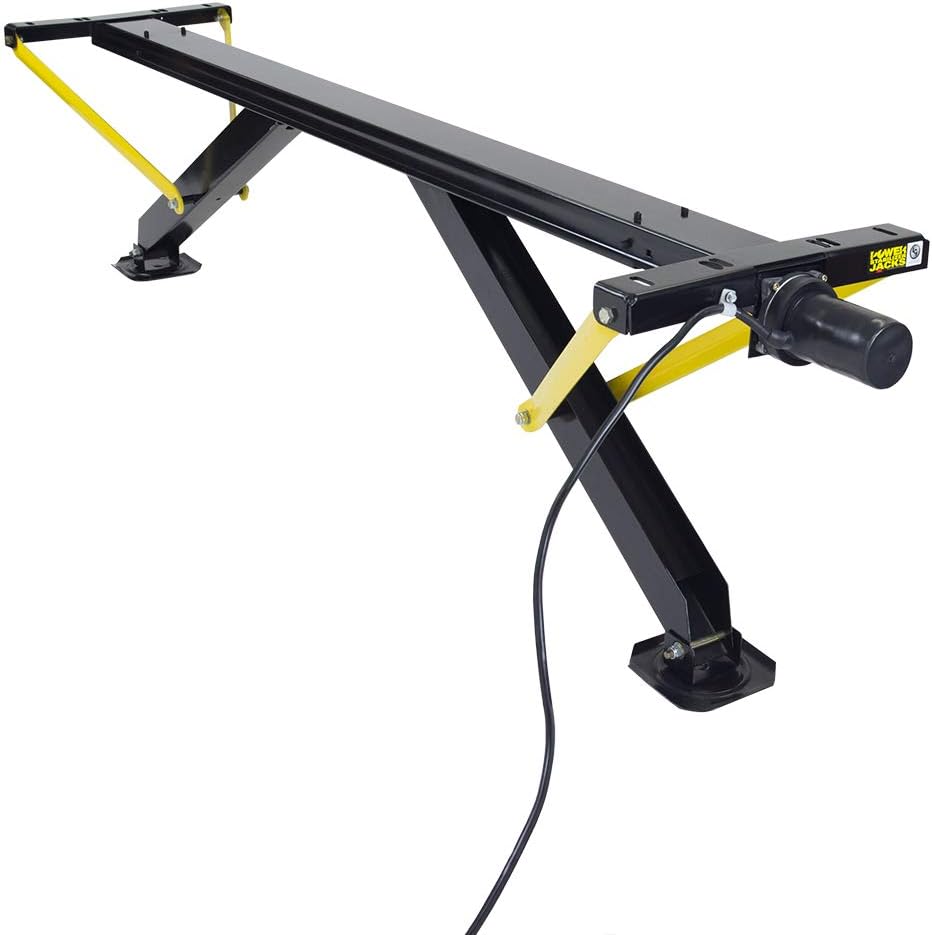

Overview of the Lippert PSX1 High-Speed RV Power Stabilizer Jack System, Black Waterproof Switch Kit, Automatic Adjustment, Heavy-Gauge Powder-Coated Steel Frame, Up to 30″ Extension – 298707
You’ll appreciate how this system replaces the old manual crank routine with a flip-of-a-switch solution that saves time and effort. The Lippert PSX1 is built to deliver consistent stabilization and is aimed at making your setup and breakdown smoother and faster.
The PSX1 promises automatic adjustment, heavy-gauge construction, and protection features like integrated breaker technology. If you spend time camping, traveling across mixed surfaces, or simply value convenience, the PSX1 is designed to make your life easier.

Lippert PSX1 High-Speed RV Power Stabilizer Jack System, Black Waterproof Switch Kit, Automatic Adjustment, Heavy-Gauge Powder-Coated Steel Frame, Up to 30
What the PSX1 is designed to fix
You want less sway, more stability, and fewer steps in the setup process for your RV or trailer. This system targets those pain points by automating leg extension and retraction.
Beyond removing the need to crank, it aims to adapt to uneven terrain automatically and protect your RV with smart limiting features. The design focuses on offering an easy user experience without sacrificing durability.

What’s included in the box
You’ll find different package configurations depending on the model you choose, but here’s what you can generally expect. The kit typically includes the stabilizer legs, hardware for mounting, and the waterproof switch kit when you select a switch-equipped configuration.
If you pick the black with switch model (the product listed), you’ll get the black stabilizer legs and the waterproof switch assembly. The white or switchless options will differ only in color or switch inclusion.
Key features at a glance
You’ll want to pay attention to the main selling points that affect daily use: automatic adjustment, heavy-gauge steel build, powder-coat finish, integrated breaker tech, and up to 30″ extension. These features define how well the system handles real-world conditions.
Each leg’s independent operation and the integrated breaker add layers of convenience and safety that are especially useful during frequent setups and in varying terrain.
Automatic Adjustment and Independent Leg Operation
You can operate each leg independently so the PSX1 adjusts itself on uneven ground without manual intervention. This means you won’t be fighting to get all four stabilizers to sit evenly.
The independent motion helps prevent binding and reduces the chance you’ll overload one leg by trying to force the frame into level when the ground won’t cooperate.
Heavy-Gauge Powder-Coated Steel Frame
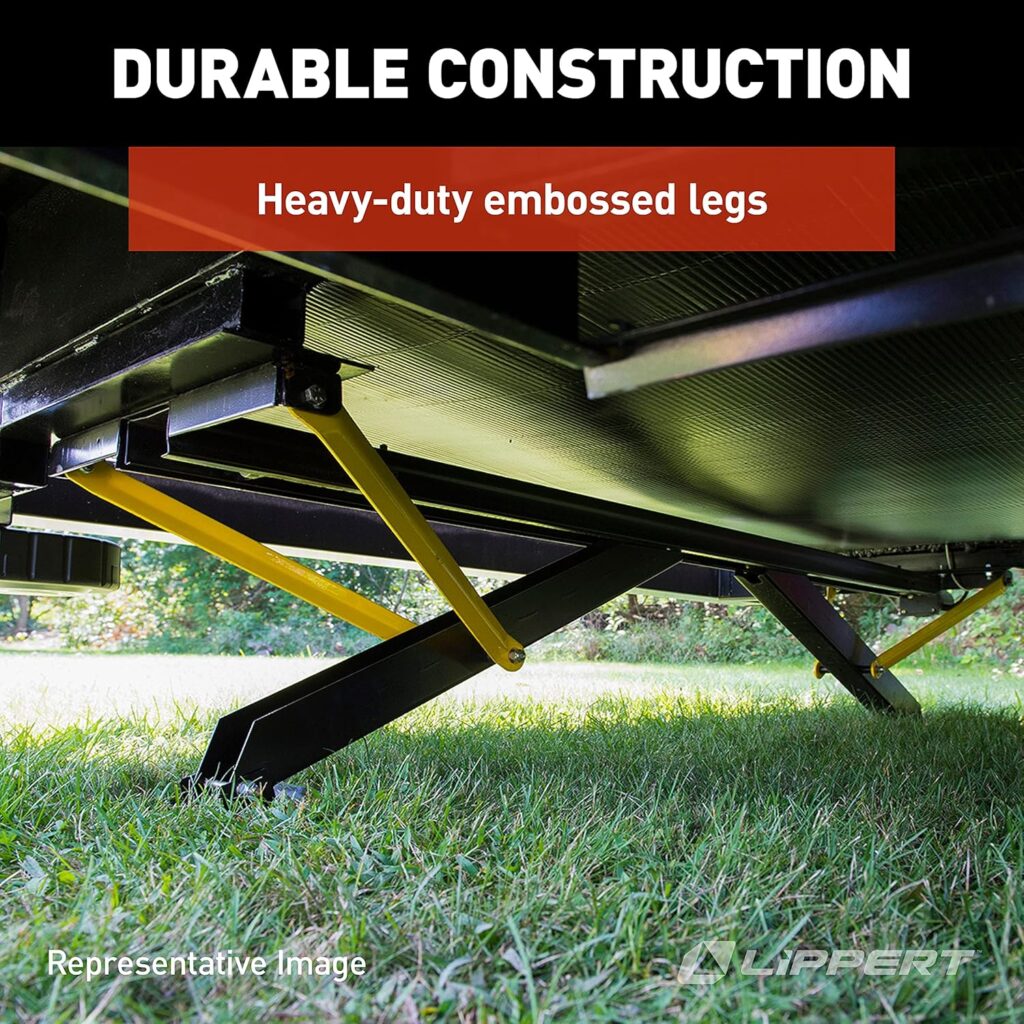
You’ll notice the sturdiness when you handle the components or watch the system operate. Heavy-gauge steel provides strength while the powder coat adds corrosion resistance for outdoor exposure.
This construction is designed for regular use and to resist weather-related wear, so the legs and frame maintain reliability season after season.
Integrated Breaker Technology
You’ll get automatic protection against overloads thanks to the built-in breaker technology. If the circuit experiences excessive current draw while lifting, the breaker trips to prevent damage or unsafe conditions.
This tech also helps minimize side-to-side movement while extending and retracting, adding a layer of stability and safety during operation.
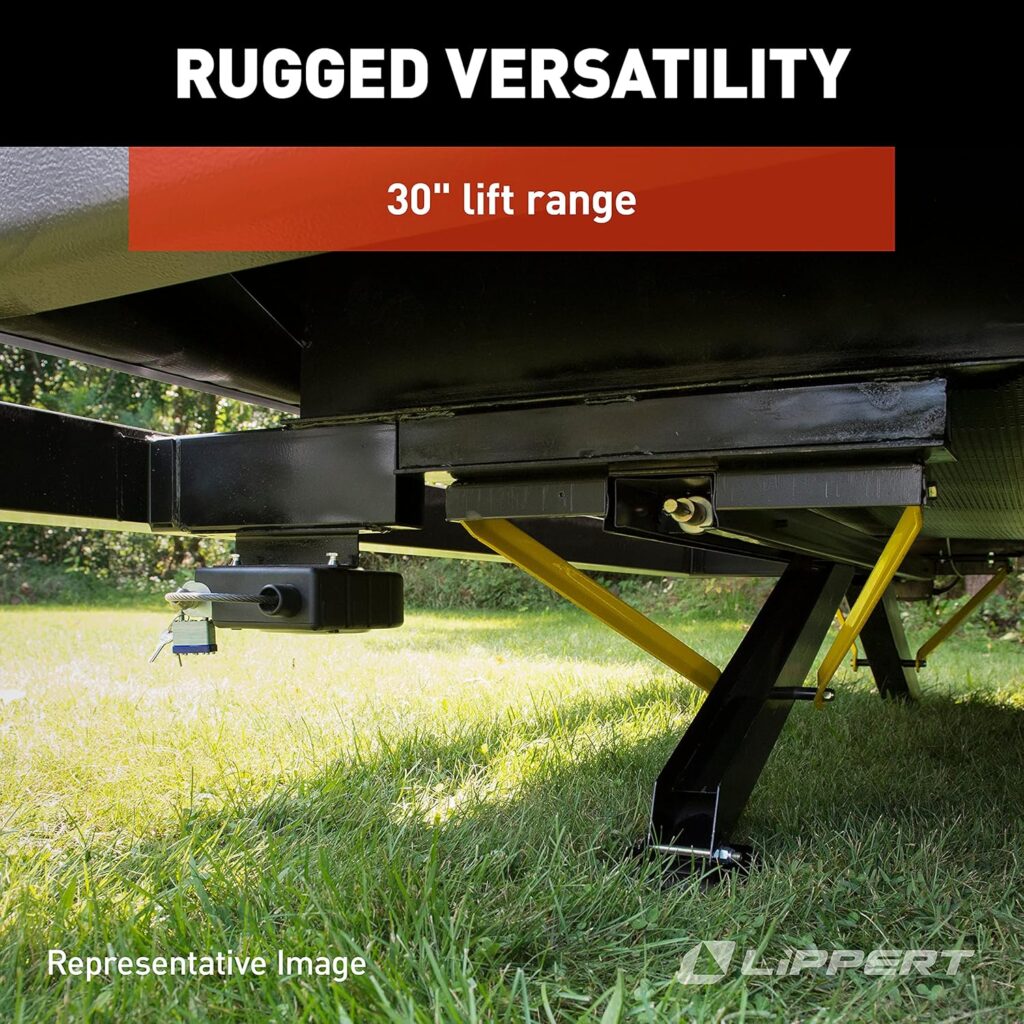
Up to 30″ Extension
You’ll be able to extend the jack legs up to 30 inches, which covers the needs of most RV and trailer setups. This level of extension helps when you’re dealing with uneven campsites or a need to lift a corner higher.
A 30″ maximum extension gives you flexibility across a wide variety of terrains and trailer heights.
Specifications table
Below is a quick table to help you compare the important specs and features quickly. You can use this to match the PSX1 to your RV’s requirements.
| Specification | Details |
|---|---|
| Product Name | Lippert PSX1 High-Speed RV Power Stabilizer Jack System (Black), Switch Kit, 298707 |
| Maximum Extension | Up to 30 inches |
| Construction | Heavy-gauge steel with powder-coat finish |
| Leg Operation | Independent legs with automatic adjustment |
| Protective Tech | Integrated breaker to prevent overload |
| Configurations | Black with switch / White with switch / Without switch |
| Intended Use | Stabilization for RVs and trailers (reduces sway and side-to-side movement) |
| Switch Kit | Waterproof (included in switch configurations) |
| Installation Complexity | Moderate (requires wiring and mounting) |
| Typical Power Source | RV battery / 12V system |
You’ll find that this table gives you the essential data you need to decide if the PSX1 fits your rig and use patterns.
Installation overview
You’ll want a clear plan before you start installing the PSX1; it isn’t a simple clip-in bolt-on for most RV frames. Installation typically requires mounting the legs, routing the wiring, and connecting the waterproof switch kit if included.
If you’re comfortable with basic mechanical work and 12V wiring, you can complete this yourself. If you’re not, getting a professional installer or an RV service shop will save time and ensure it’s done safely.
Tools and parts you’ll need
You’ll need basic hand tools such as sockets, wrenches, a drill, and possibly a grinder to clear rust or paint where the mounts will sit. Wiring tools (crimpers, wire strippers, heat shrink or marine-grade connectors) are also essential.
Make sure you have the right mounting hardware for your RV frame thickness and confirm the switch location is convenient and weather-protected. Also verify your RV’s battery and fuse capacity before wiring.
Typical installation steps
You’ll mount the stabilizer legs to the RV frame, route and secure the wiring, then mount the waterproof switch in a convenient inside location. Final steps include testing the system fully and securing all wiring to prevent chafing.
Follow these broadly:
- Position and mark mount points on the frame.
- Drill and attach legs with supplied or appropriate fasteners.
- Run wires from each motor to the switch location and the battery.
- Install the waterproof switch and connect per wiring diagram.
- Test operation and adjust as needed.
Wiring and the waterproof switch kit
You’ll be pleased that the switch is designed to be waterproof, which helps protect against the elements and makes it reliable for outdoor use. Wiring the switch typically involves connecting to the RV’s 12V power and the motors for the stabilizer legs.
Use marine-grade or automotive-grade connectors and protective loom where wires pass through body panels. Proper fuse placement near the battery and following wiring diagrams are critical to keep everything safe and working properly.
Wiring best practices
You’ll want to place a fuse or circuit breaker near the battery as the first line of defense. Secure wiring with clips and conduit to prevent rubbing against metal, and avoid excessively long runs that can lead to voltage drop.
Label each wire as you go so future maintenance or troubleshooting is much faster. If you’re not comfortable with automotive wiring, hire a professional to do the connections.
Performance on different terrains
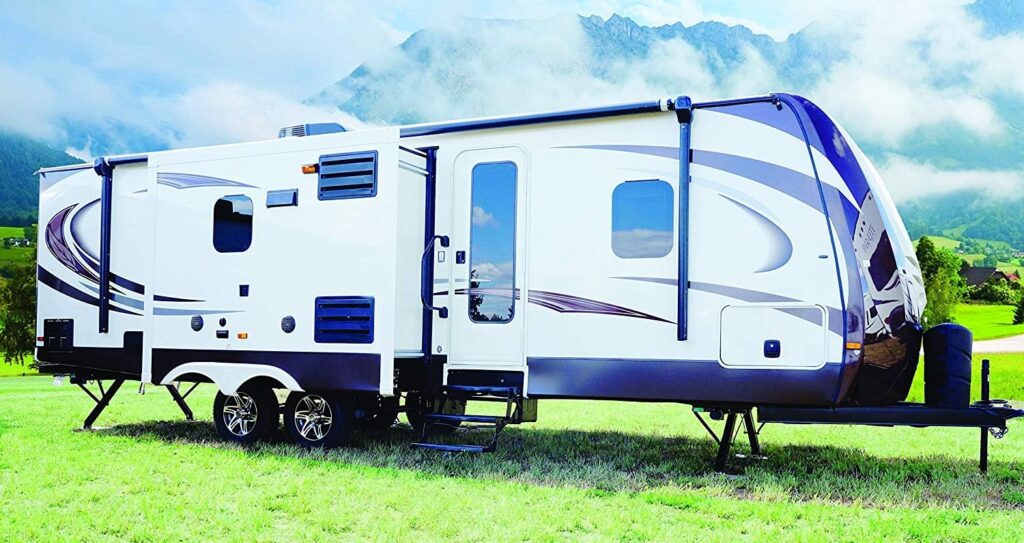
You’ll see the PSX1 adapt to gravel, packed dirt, uneven grass, and moderately sloped campgrounds. Its independent legs help them find secure footing without you having to crank each one.
In very soft or loose soil, you may need additional footing pads to prevent sinking, just as you would with any stabilizer. The system’s motor torque and endpoint detection give reliable operation in typical campsite conditions.
Handling steep or highly uneven sites
You’ll want to be cautious on extremely sloped or rocky sites because no stabilizer can fully compensate for dangerous grade angles. The PSX1 handles moderate unevenness well, but if you’re frequently on extreme terrain, combine it with proper site selection and leveling jacks.
Using chocks and wheel leveling devices in combination with the PSX1 will yield the best overall stability.
Durability and weather resistance
You’ll appreciate the powder-coated finish and heavy-gauge steel for resisting rust and withstanding outdoor use. These components are built to handle repeated cycles and exposure to moisture and road grime.
Routine inspection and cleaning will extend the life of the product, especially after driving through salted roads or coastal environments.
Corrosion considerations
You’ll still want to keep an eye on mounting points and exposed fasteners, as these are likely to show the earliest signs of corrosion. Touch-up paint and periodic lubrication of moving parts will minimize wear.
If you frequently travel in corrosive environments, consider more frequent maintenance intervals to maintain top performance.
Safety features and the integrated breaker
You’ll find the integrated breaker technology particularly valuable because it prevents the system from trying to lift beyond safe limits. When the circuit is overloaded, the breaker trips, protecting the motors and your RV frame.
This safety measure reduces the risk of damaging the stabilizers or causing an imbalance that could lead to instability during operation.
How the breaker helps everyday use
You’ll notice less side-to-side movement while the legs extend and retract, which makes it safer to operate the system without having to watch every leg closely. The automatic trip function prevents damage when a leg meets unexpected resistance.
If a breaker trips, you’ll need to reset and check the cause before continuing, which encourages safe operation and prevents repeated stress on the motor.
Maintenance recommendations
You’ll benefit from a simple maintenance routine: inspect for loose bolts, clean dirt and debris, and lubricate pivot points periodically. Keeping electrical connections clean and secure will prevent many common issues.
A seasonal check before peak camping months and after winter storage will keep the PSX1 operating reliably. Replace worn or damaged mounting hardware immediately to avoid safety issues.
Lubrication and cleaning
You’ll want to use a light lubricant on pivot points and slide surfaces, and wash away salt and grime after coastal trips. Avoid over-lubrication where it can attract grit; a wipe-down after applying lubricant is a good habit.
Protect the switch and any exposed electrical connections with dielectric grease where appropriate to repel moisture and improve longevity.
Troubleshooting common issues
You’ll likely encounter a few predictable issues over time, such as a breaker trip, slow extension, or a stuck leg. Most problems have straightforward fixes if you follow a methodical approach.
Start with power checks: confirm battery voltage, inspect fuses, and verify switch function. Then move to mechanical checks like mounts, fasteners, and lubrication.
If a breaker keeps tripping
You’ll first check for obstructions or binding at the affected leg. If nothing is caught, test the motor current draw and wiring for short circuits or poor connections.
If the motor draws excessive current with no binding, the motor or internal gearbox may be failing and might need repair or replacement.
If a leg won’t extend or retract
You’ll check the mechanical connection points and the motor wiring. Ensure the switch is functioning and that the fuse or breaker hasn’t opened.
If the motor hums but doesn’t move, inspect gears and splines for wear. If there’s no hum, look for power supply and wiring issues.
Comparison with manual stabilizers and competitor electric stabilizers
You’ll notice time savings and convenience immediately compared to manual cranks. Manual stabilizers require physical effort and more time, while the PSX1 streamlines setup and reduces fatigue.
Against competitor electric stabilizers, the PSX1 stands out for integrated breaker protection and independent leg operation. Competitors may offer similar features, so consider mounting compatibility, motor speed, extension length, and warranty when comparing.
Cost vs. convenience
You’ll spend more up front for an electric system than for manual stabilizers, but you’ll gain convenience and reduced physical strain. Consider how often you set up camp and if the convenience is worth the price for your lifestyle.
The PSX1 is aimed at frequent campers and those who want a robust solution with safety features built in.
Pros and cons
You’ll want a clear list of strengths and weaknesses to weigh your decision. Below are the most common positives and drawbacks users report.
Pros:
- Saves significant time and effort compared to manual cranks.
- Automatic adjustment and independent legs handle uneven terrain well.
- Heavy-gauge steel and powder-coat finish provide durability.
- Integrated breaker technology enhances safety and prevents overload damage.
- Waterproof switch option improves reliability in wet conditions.
Cons:
- Installation requires moderate mechanical and wiring skills.
- In extremely soft ground, additional footpads or support may be necessary.
- Breaker trips require manual inspection and reset, adding a step to troubleshooting.
- Upfront cost is higher than manual stabilizers.
You’ll find this list gives a practical snapshot of what to expect in daily use.
Who should consider buying the PSX1
You’ll benefit most from the PSX1 if you camp regularly, manage setups at different sites, or have physical limitations that make manual cranking difficult. If you value convenience and safety while on the road, it’s a strong candidate.
It’s also suitable for those who want a durable, weather-resistant system with built-in protection and a relatively high maximum extension.
Who might not need it
You’ll want to avoid this upgrade if you rarely move your RV, always stay on flat, paved surfaces, or are on a tight budget and comfortable with manual cranks. In those cases, a manual stabilizer might be sufficient.
If your RV already has a fully automated leveling system that covers the same function, check compatibility before adding this system.
Cost of ownership and long-term value
You’ll incur an initial purchase and installation cost, but the long-term value comes from saved time, reduced physical strain, and potentially fewer maintenance headaches related to manual components. Well-maintained systems can last many seasons.
Factor in periodic maintenance costs and any replacement mounting hardware or electrical parts, but overall the PSX1 can pay for itself in convenience if you camp frequently.
Frequently asked questions (FAQs)
You’ll likely have practical questions before you commit; here are common ones and concise answers.
- Will the PSX1 work with my RV frame? You’ll need to verify frame compatibility and mounting space, as most standard frames are compatible but some custom or thin rail frames may need adaptors.
- Is the switch truly waterproof? The kit includes a waterproof switch option in switch-equipped configurations; proper sealing and correct mounting ensure long-term weather resistance.
- Can I install it myself? You’ll be able to if you’re comfortable with basic mechanical work and 12V wiring. Otherwise, a professional installer is recommended.
- What happens if the breaker trips? You’ll reset it after clearing whatever caused the overload. Check for binding or obstructions and inspect wiring before continuing.
- How long does installation take? You’ll likely spend a few hours to half a day depending on experience, access to the frame, and whether you need to run additional wiring.
These answers help you assess readiness and any gaps in knowledge or tools.
Real-world user expectations
You’ll find that many users report a dramatic reduction in setup time and less physical strain. You should expect smoother operations if you follow the installation and maintenance recommendations.
Real-world performance will depend on site conditions, how well the system was installed, and how consistently you maintain it. Treated properly, it becomes a reliable convenience feature.
Final verdict
You’ll find the Lippert PSX1 High-Speed RV Power Stabilizer Jack System, Black Waterproof Switch Kit, Automatic Adjustment, Heavy-Gauge Powder-Coated Steel Frame, Up to 30″ Extension – 298707 to be a well-rounded stabilizer that balances convenience, durability, and safety. It’s ideal for frequent campers who want faster setup, reduced manual effort, and built-in protection against overloads.
If you prioritize ease of use, independent leg control, and a sturdy build, this system is worth considering as a meaningful upgrade to your RV stability setup.

Disclosure: As an Amazon Associate, I earn from qualifying purchases.