Looking for a reliable way to stop your RV or trailer from rocking when you park at camp or a rest area?

Product overview
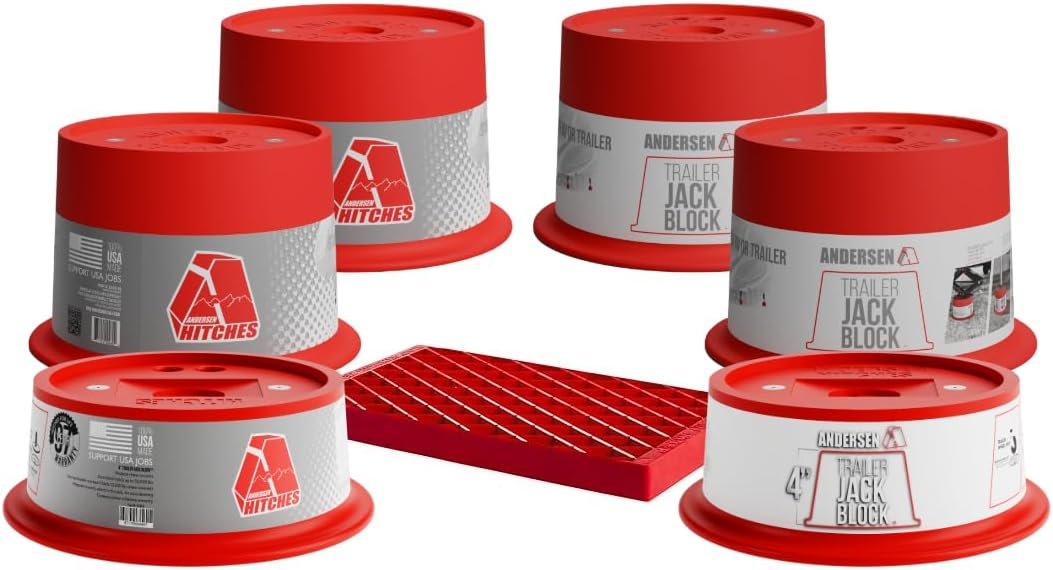
You want gear that works without drama, and the ANDERSEN HITCHES | RV Accessories | 6-Pack Trailer Jack Blocks w/ Free Clean Step | Leveling Block Chocks | 3608 is built to make stabilization simple. These blocks are designed to eliminate nearly all movement and sway in parked RVs and trailers, and they come as a 6-pack so you can use multiple blocks under different jacks or support points.
You’ll notice the blocks are stackable and multifunctional, letting you adapt quickly to different surfaces and vehicle heights. They resist dirt and oil, and the manufacturer explicitly mentions extra uses like seating and stepping, which adds small lifestyle conveniences when you’re parked.
What’s included
You’ll get six trailer jack blocks and a free Clean Step included with the package, so you have both stabilization and a handy entry aid. The blocks are intended to be used individually or stacked two high for more height, and they have a recessed pad area and post-hole sized for typical trailer jacks.
You’ll also receive a product that’s described as extremely strong and durable, and that’s important if you want something that won’t shear or deform under regular use. The free Clean Step gives you a bonus function for entering and exiting your rig without tracking dirt.
Key specifications
You like numbers when making decisions, so here are the measurable details you need to know. Below is a quick reference table that breaks down the important specs and features for easier comparison before you decide.
| Feature | Details |
|---|---|
| Product name | ANDERSEN HITCHES |
| Quantity | 6 blocks + Free Clean Step |
| Recessed pad diameter | 9-1/8 inches |
| Recessed post-hole diameter | 2-1/2 inches |
| Block dimensions (single) | 8 inches tall; 12 inches diameter at base; 10 inches diameter at top |
| Height when double-stacked | 14 inches |
| Material characteristics | Strong, durable; resists dirt and oil |
| Stack limit | Do not stack more than two high |
| Additional uses | Seat, motorcycle stand, water bucket, step-stool |
| Primary purpose | Eliminate movement and sway in parked RVs/trailers |
You’ll find this table handy when you’re deciding how many to use and where to place them, especially since the recessed pad and post-hole sizes fit most standard trailer jacks.

ANDERSEN HITCHES | RV Accessories | 6-Pack Trailer Jack Blocks w/ Free Clean Step | Leveling Block Chocks | 3608
Performance and stability
You want stability that feels solid underfoot and doesn’t require constant readjustment, and these trailer jack blocks claim to eliminate nearly all movement and sway. In practical use, they distribute load across a large pad area and give a stable base that reduces lateral rocking, especially on softer or uneven ground.
You should expect them to outperform small wooden blocks or single-use chocks because of their larger footprint and engineered recessed area for jacks. The design intends to keep the jack post centered and prevent slippage, which reduces stress on your trailer frame and stabilizer components.
How well it reduces sway and movement
You’ll notice a dramatic reduction in sway when the blocks are used correctly under each jack point. The large diameter pad and wide base give a secure contact area that prevents the jack from digging into soft soil or shifting on gravel, which is a common source of movement.
You’ll still want to pair these blocks with wheel chocks and your vehicle’s stabilizers where appropriate, because while the blocks are excellent for jack support and sway reduction, they are one part of a comprehensive stabilization setup. Using them together with other systems gives the most consistent results.
Weight capacity and durability
You’ll want to know whether these blocks can handle the loads your RV or trailer places on them, and the manufacturer markets them as extremely strong and durable. They resist dirt and oil, which helps them keep their shape and function in camp conditions where grime and lubricants are present.
You should be aware the listing doesn’t spell out an explicit maximum weight capacity per block, so if you’re working with a heavier fifth-wheel or a very large trailer you might want to contact the manufacturer for load ratings. In most typical RV and trailer applications they perform well, and the material design and thickness indicate they’re built for repeated, rugged use.


Setup and use
You don’t want a fiddly setup process when you arrive at your site, and these blocks are straightforward to use. Place a block under your jack foot, center the post in the recessed hole, and lower until the jack engages the recessed pad area for a secure contact.
You’ll find the blocks stack easily for added height—use two stacked to reach higher setups—but keep in mind the manufacturer’s note not to stack more than two high. That guidance keeps the stacked stability within safe limits and helps avoid tipping or crushing under load.
Using with the trailer jack
You’ll want to position the jack plate so that the load is centered on the recessed pad; the 9-1/8 inch diameter pad gives plenty of room for misalignment and helps keep the jack from slipping off. Lower the jack slowly and ensure the post seats into the 2-1/2 inch recessed hole if the jack post is designed to fit there, which can help prevent lateral motion.
You’ll also want to check local leveling needs: if you have uneven ground, combine the blocks with other leveling methods like ramps or under-axle adjustments to achieve a flat living area. Using the blocks in pairs or under different support points lets you fine-tune the overall balance of your rig.
Stacking and height adjustments
You’ll appreciate that stacking two blocks gives you an effective height of 14 inches, which often solves situations where the jack alone doesn’t reach a stable surface. The blocks are designed to nest and stack in a way that resists shifting, and the base and top diameters provide a stable footprint when stacked appropriately.
You must not stack more than two high, and you should inspect stacked pairs for any signs of uneven contact before loading. If the ground beneath the lower block is soft or sloped, add a wider base or use a larger surface area to spread the load and reduce sinking.
Versatility and extra uses
You’ll like a product that pulls double—or triple—duty, and these blocks are promoted as usable as seats, step-stools, motorcycle stands, or even water buckets for firefighting. That flexibility adds value beyond pure jack support and can reduce how much gear you need to carry.
You’ll be cautious about using them as seating when stacked; they’re sturdy, but the manufacturer’s stacking limit applies and you should always test stability before relying on them as furniture or a work surface.
As a seat or step-stool
You’ll find them handy as a temporary seat while setting up camp or doing small tasks outside your RV. Their 12-inch base diameter gives stable seating for quick tasks, and the textured or recessed pad provides a non-slip sitting or stepping surface.
You should avoid using more than two stacked blocks as a makeshift step-ladder and always make sure the stacked pieces are fully engaged and sits flat on the ground before applying weight. Using them on very uneven or soft surfaces for seating increases the risk of tipping, so pick a solid spot.
As a motorcycle stand or water bucket
You’ll be able to use a single block as a stable mount for a motorcycle center stand in many setups, thanks to the recessed pad that keeps the stand centered and stable. As a water bucket, the block’s open top when inverted can carry water for firefighting or cleanup in a pinch, which is a practical campsite hack that adds safety value.
You’ll want to clean the blocks if you use them to carry water or as a seat after they’ve supported greasy jack posts or oily surfaces. Their dirt- and oil-resistant properties help, but you should rinse and dry any surface that will come into contact with items for which cleanliness matters.
Comparison to other options
You’ll probably be comparing these blocks to wood, smaller plastic blocks, or commercial leveling systems, and there are clear tradeoffs to consider. Wood blocks can be cheap and effective but rot and crumble over time; cheaper plastic blocks may warp or shear after repeated loading; full mechanical leveling systems cost much more and add complexity and weight.
You’ll like that the ANDERSEN HITCHES blocks hit a mid-point: they’re more durable and multi-use than many simple plastic blocks, while costing a fraction of an integrated leveling system. The stackability and recessed pad are features that many cheaper alternatives don’t offer.
Advantages over wood or single-purpose blocks
You’ll get weather resistance that wood can’t match—these blocks won’t rot or split when wet. Their molded design resists oil and dirt, which keeps their performance consistent season after season.
You’ll also benefit from predictable geometry and a recessed pad that aligns with jack posts, whereas homemade wood blocks may be uneven or prone to crumbling under load, leading to instability.
When you might prefer something else
You’ll consider a full mechanical leveling system if you want one-touch leveling and have the budget and power/space to install it. Similarly, if you need precise height control beyond what two stacked blocks can provide, ramps or dedicated leveling systems will be more appropriate.
You’ll also choose heavier-duty engineered pads or steel plates for exceptionally heavy equipment or industrial uses where manufacturer-rated capacity and certifications are required.
Installation tips and best practices
You’ll get the best results when you prepare the setup area before relying solely on the blocks. Clear away loose gravel, fill depressions with firm material, or place a wider base under the lower block if ground quality is doubtful.
You’ll also use wheel chocks and stabilizer jacks in combination with these blocks for full safety. Stabilizing at multiple points on the trailer eliminates motion more effectively than any single product alone.
Preparing the ground
You’ll start by finding the flattest spot possible for each jack point, and you can lay a piece of plywood or a leveling board down first if the ground is very soft or lumpy. This distributes the load and prevents the block from sinking or tilting as weight is applied.
You’ll take the time to remove any rocks or other obstacles that would create a point load on the block and cause rocking or uneven pressure. A few minutes preparing the surface will save you time and frustration later.
Positioning and safety
You’ll lower the jack slowly and ensure the post is centered in the recessed hole; sudden movement or partial seating can damage the jack foot or the block. Keep hands and feet clear of pinch points, and never place your body under a load supported only by jacks and blocks.
You’ll also inspect the blocks for cracks or extrusion defects before each season—small flaws can grow and lead to failure under load, so replace any compromised blocks immediately.

Maintenance and care
You’ll want to keep them clean so they last and maintain grip, especially if you use them for seating or for carrying water. A quick rinse with fresh water and mild soap usually removes grease and debris.
You’ll store the blocks out of prolonged UV exposure if possible; while they’re manufactured to resist outdoor use, extended sunlight can degrade plastics over very long periods. Stack them dry and store in a cool, shaded spot to maximize lifespan.
Cleaning and storage
You’ll wipe or hose them off after use in multiple-grime settings, paying attention to recessed areas where dirt can accumulate. If you use them as a water bucket or to carry diesel-contaminated residue, wash them thoroughly to prevent transfer of contaminants.
You’ll store them stacked neatly and secure them if transporting so they don’t rattle loose. Keeping them in a weather-resistant container or under an awning will reduce long-term weathering.
Longevity
You’ll likely get multiple seasons of regular use from the blocks if you care for them properly and avoid subjecting them to conditions beyond their intended scope. Their resistance to dirt and oil helps them maintain function in messy environments.
You’ll monitor for structural changes like cracking or warping and replace blocks at the first sign of degradation. Because the manufacturer recommends limiting stacking to two blocks, you shouldn’t be tempted to push the design beyond recommended limits.
Pros and cons
You’ll appreciate a clear, honest view of the strengths and limitations so you can make an informed purchase. These blocks balance stability, cost, and versatility well for most RV and trailer owners.
| Pros | Cons |
|---|---|
| Large recessed pad for stable jack seating | Manufacturer doesn’t list a specific weight capacity per block (contact for details) |
| Stackable up to two for increased height | Not designed for stacking more than two—limits extreme height adjustments |
| Multipurpose (seat, step, motorcycle stand, water bucket) | May require supplemental ground preparation in very soft soils |
| Resistant to dirt and oil | Not a substitute for full powered leveling systems when precision or automation is required |
| 6-pack provides multiple points of use | Bulkier to store/transport compared to single-piece foldable systems |
You’ll see that the pros focus on practical everyday camping value, while the cons are about edge cases and using the blocks beyond their practical design limits.
Real-world user scenarios
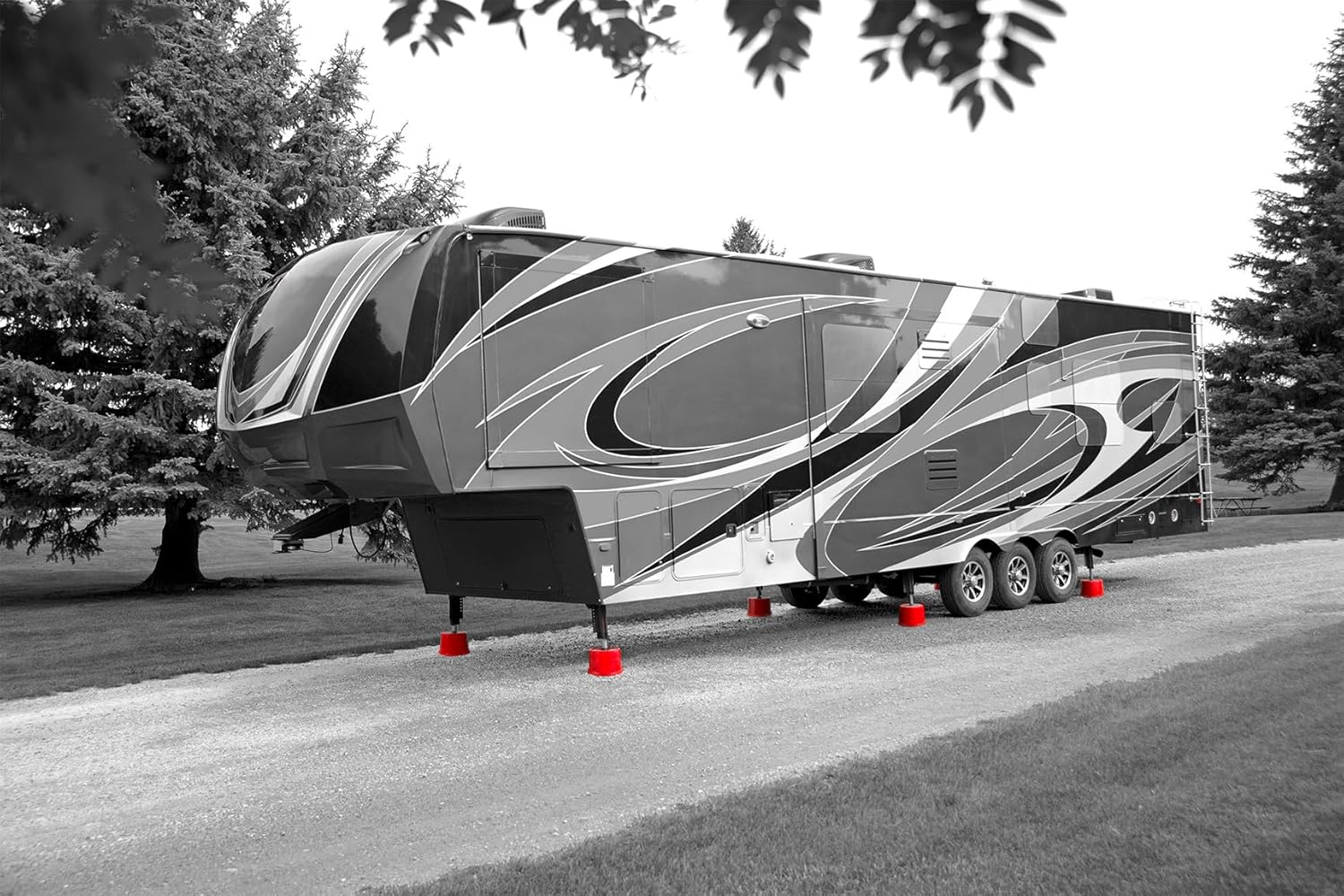
You’ll want to picture how these blocks fit into actual use, and they shine during weekend trips, seasonal use, and extended stays where you frequently set up and tear down. They’re also handy in short emergency stops when you need to stabilize quickly.
You’ll find them useful for both private RVers and those who rent or borrow spaces where ground quality varies, since carrying a set of blocks gives you consistent behavior regardless of campsite surface.
Camping and extended stays
You’ll use the blocks under front or tongue jacks to stop tipping and reduce movement when your family is moving about inside the RV. The reduced sway means less stress on doors, cabinets, and on your comfort when people move around inside.
You’ll also use them over multiple nights as a reliable base for a stable living area. Their stackability helps when terrain requires different heights from one location to the next.
Roadside stabilization and repairs
You’ll find them indispensable if you need to stabilize a trailer for roadside repairs or to change a tire. The stable base reduces the risk of the trailer shifting while you work, which makes roadside tasks safer and easier.
You’ll want to pair them with wheel chocks and use a jack stand or additional safety measures for under-vehicle work, because while the blocks provide a stable base, you should always use redundancy when safety is critical.
Frequently asked questions (FAQ)
You’ll have practical questions about fit, capacity, safety, and versatility, so here are common queries answered directly and simply.
Q: Will these blocks fit my trailer jack? A: You’ll usually find most standard trailer jack posts fit into the 2-1/2 inch recessed post-hole or seat securely on the 9-1/8 inch recessed pad. If your jack post is unusually large or square, you should measure it and ensure compatibility before relying exclusively on the recessed hole.
Q: Can I stack more than two blocks to reach higher heights? A: You should not stack more than two blocks at any time, as recommended by the manufacturer. Stacking more than two increases the risk of tipping or compressive failure and voids the intended safety design.
Q: Are these blocks rated for heavy fifth-wheel trailers? A: The manufacturer describes the blocks as extremely strong and durable but does not provide a specific weight capacity in the product details provided here. You’ll want to contact Andersen Hitches or consult the product documentation for an exact load rating if you have a very heavy rig.
Q: How do the blocks perform on soft ground? A: You’ll get better results when you prepare the ground or use a wider base under the block on very soft surfaces. The blocks distribute load well, but like any single-support solution, they can sink if the underlying soil can’t support the pressure. Adding plywood or a ground board can reduce sinking.
Q: Can these blocks be used as a permanent campsite solution? A: You’ll find them suitable for long-term use if the ground and load are appropriate, but for permanent installations you might prefer a professionally engineered foundation or integrated leveling system. For seasonal or long camping stays, they’re an excellent and cost-effective option.
Q: How do I clean and store them? A: You’ll rinse off dirt and grease with mild soap and water, drying thoroughly before stacking for storage. Store them out of direct sunlight if possible to reduce long-term UV exposure.
Q: Can I use them under stabilizer jacks or axle jacks? A: You’ll use them under any jack point where the recessed pad accommodates the jack foot or the post-hole accepts the jack post. For axle jacks or certain stabilizers, make sure the footprint and load distribution match the block’s geometry.
Q: What is the benefit of the free Clean Step? A: You’ll get a convenient entry step that reduces dirt tracked into your RV and gives a stable surface for entry and exit. It’s a practical bonus for daily use and reduces the need to buy a separate step.

Final verdict
You’ll find the ANDERSEN HITCHES | RV Accessories | 6-Pack Trailer Jack Blocks w/ Free Clean Step | Leveling Block Chocks | 3608 to be a practical, versatile, and robust solution for most RV and trailer stabilization needs. They balance portability, multi-use functionality, and stable design in a package that makes campsite setup quicker and safer.
You’ll get real value from the 6-pack configuration, stackability up to two blocks, and the added convenience of using the blocks as seats or stepping surfaces. If you want predictable performance without a huge investment, and you pair them with good ground prep and wheel chocks, these blocks are a dependable addition to your gear.

Disclosure: As an Amazon Associate, I earn from qualifying purchases.