Looking for a reliable way to get cleaner, safer water while you travel in your RV, camper, or boat?

Product snapshot
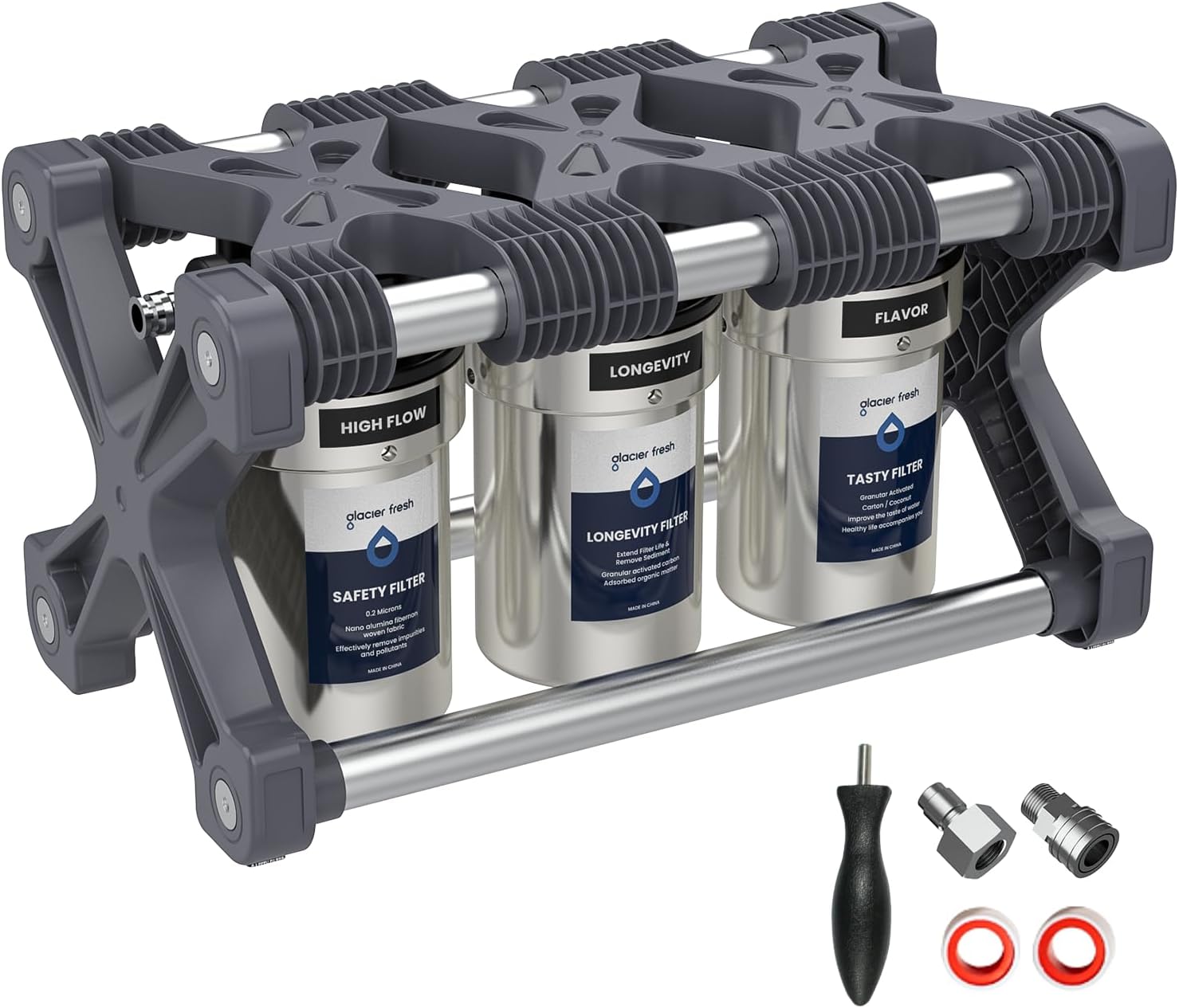
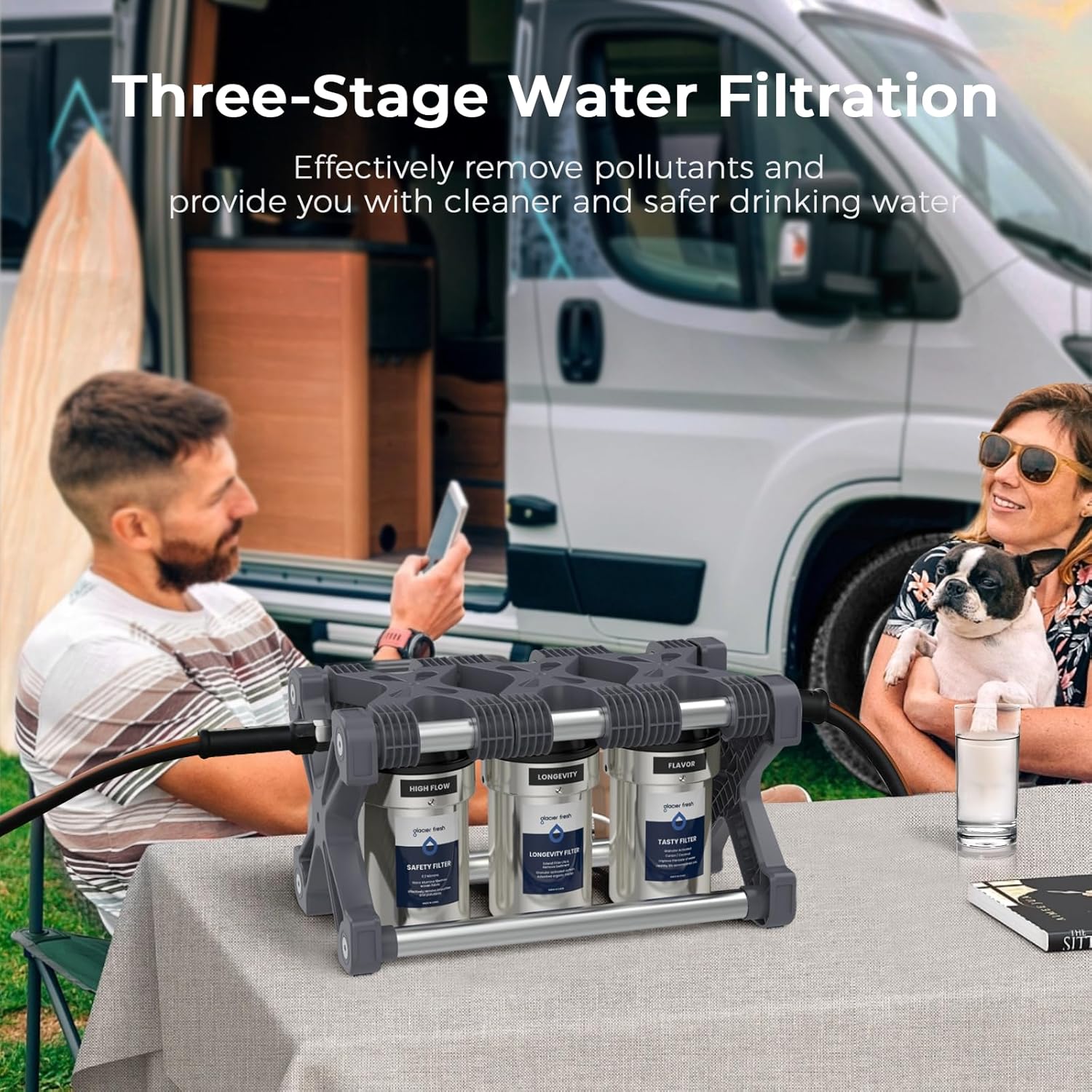
You’re looking at the GLACIER FRESH Replacement for Technology RV Water Filtration System, 0.2 Micron Camper Water Filter with Compact 5 Inch Filter, 3-Stage Premium RV Water Filtration System for RVs, Campers and Boats. This system is built to give you multiple layers of protection — a sediment prefilter, activated carbon, and a 0.2-micron high-flow membrane — all in a compact, lightweight package that connects to garden hose fittings.
You’ll find this filter aimed squarely at RVers and boaters who want improved taste, fewer particulates, and a fast, easy connection at city or campground water hookups. The balance of portability, performance, and ease of use is what makes it appealing for mobile water needs.
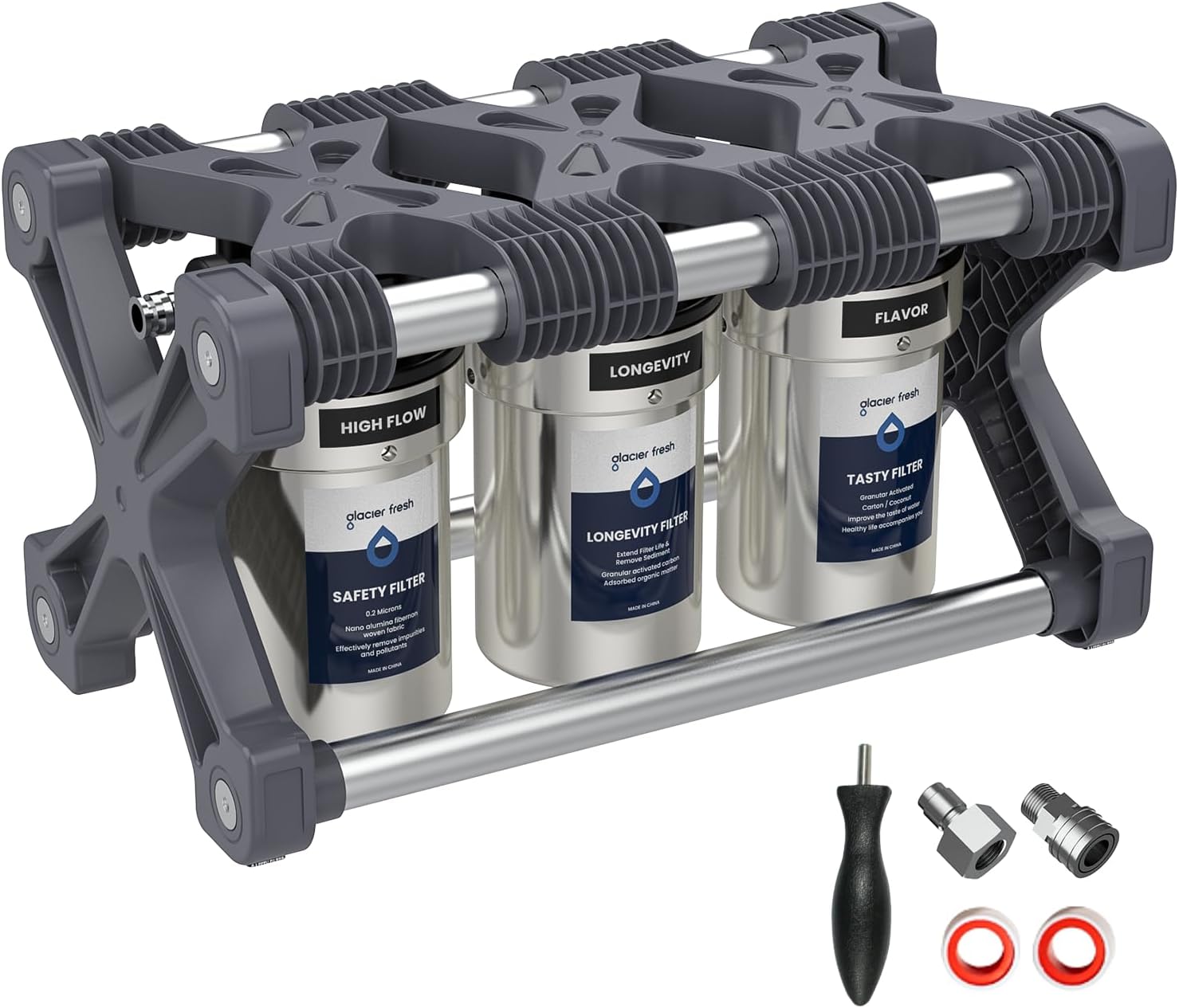
GLACIER FRESH Replacement for Technology RV Water Filtration System, 0.2 Micron Camper Water Filter with Compact 5 Inch Filter, 3-Stage Premium RV Water Filtration System for RVs, Campers and Boats
$239.99 In Stock
Key features overview
You should expect a 3-stage filtration approach that combines sediment trapping, carbon treatment, and submicron particulate removal. The system uses stainless steel garden hose quick connects, compact 5-inch filters, and a polycarbonate carbon fiber frame for reduced weight and corrosion resistance.
You’ll also appreciate that the system is rated for operating temperatures between 40°F and 125°F, and that the manufacturer highlights filter life measured in months under typical use. These design choices make it a practical choice when you want something easy to attach, light to carry, and more thorough than single-stage inline filters.
What the 3-stage filtration includes
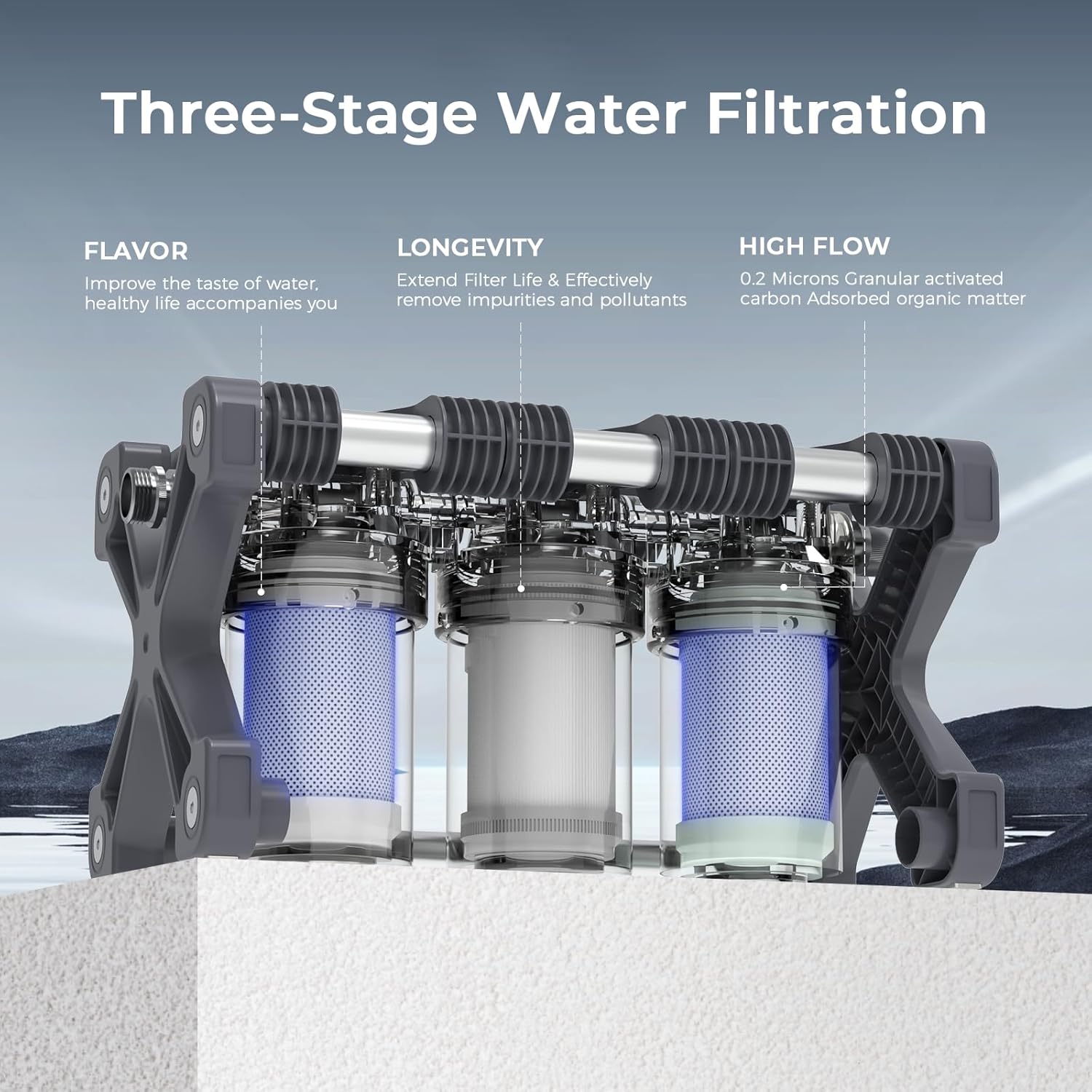
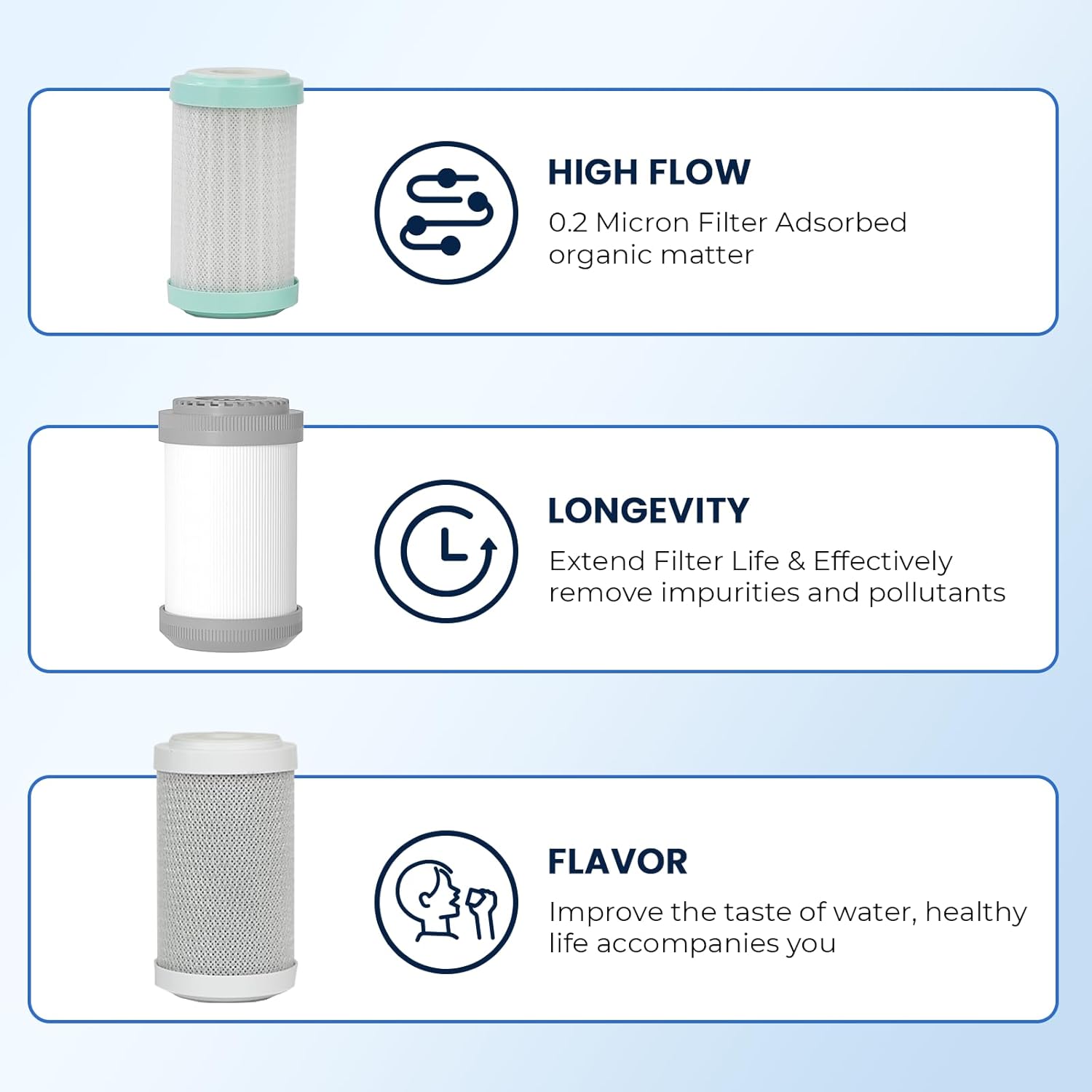
You’ll get three distinct elements working together: a sediment prefilter, a coconut-shell carbon/charcoal filter to improve taste and reduce chlorine/organic compounds, and a 0.2-micron high-flow filter for fine particulate reduction. Each stage has a specific role that reduces different contaminants and extends overall filter life.
You’ll notice better-tasting water and fewer visible particulates in most campground hookups, and the reduced micron size means it targets much smaller particles than many standard RV inline filters.

Specifications at a glance
You’ll find it useful to compare metrics quickly when choosing gear. The table below breaks down the most relevant specifications so you can see what applies to your setup.
| Specification | Detail |
|---|---|
| Product name | GLACIER FRESH Replacement for Technology RV Water Filtration System, 0.2 Micron Camper Water Filter with Compact 5 Inch Filter, 3-Stage Premium RV Water Filtration System for RVs, Campers and Boats |
| Filtration stages | 3 (Sediment prefilter, Coconut shell carbon, 0.2-micron high-flow membrane) |
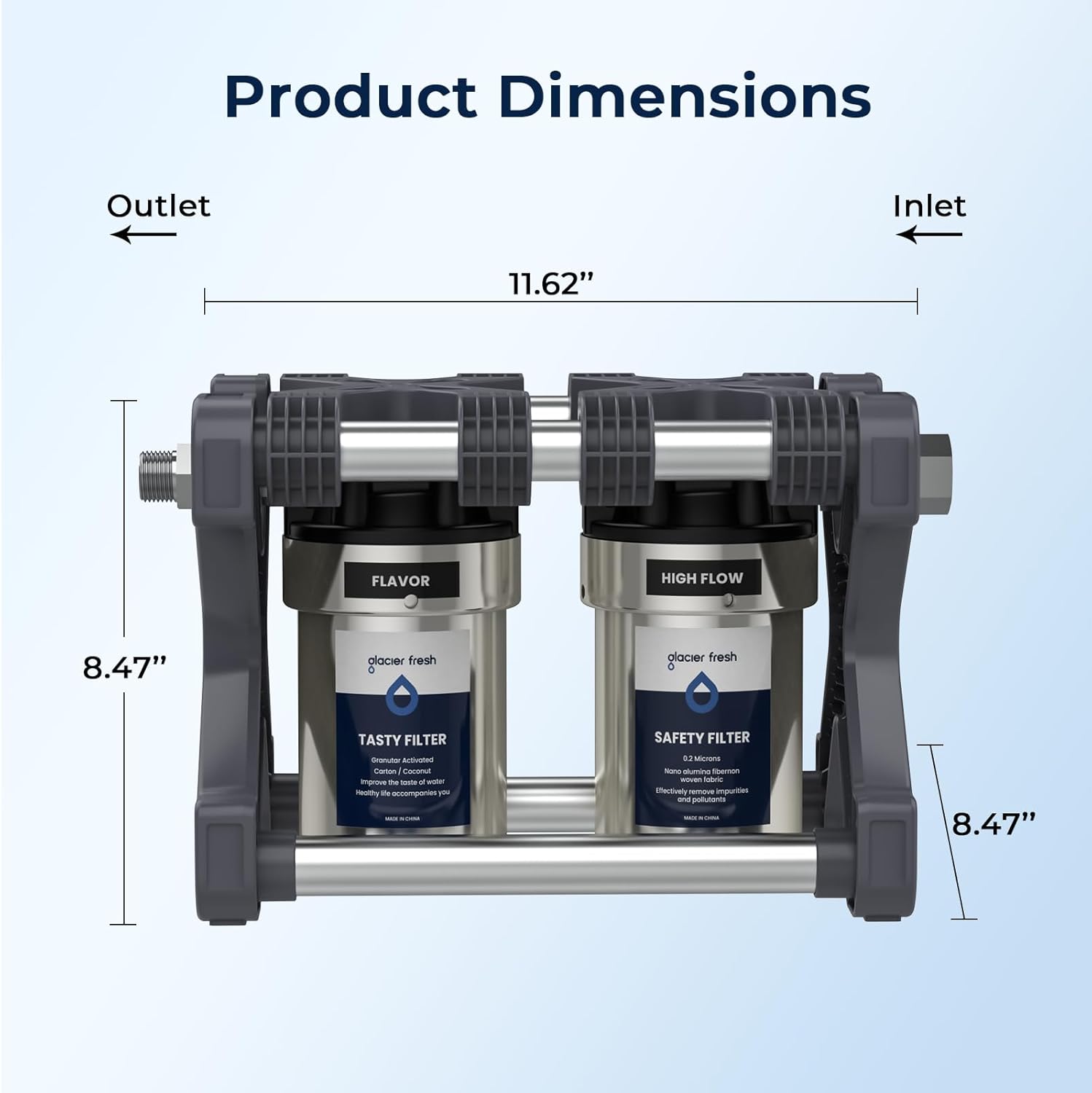
| Filter size | Compact 5-inch filters |
| Micron rating | 0.2 micron (final stage) |
| Connections | Stainless steel garden hose quick connects |
| Materials | Polycarbonate carbon fiber frame, stainless steel fittings |
| Typical filter life | 3–4 months with sediment prefilter (varies by source water) |
| Operating temperature | 40°F to 125°F |
| Common uses | RVs, campers, travel trailers, camper vans, boats |
| Key benefits | Improved taste, particulate reduction, portable and lightweight |
You’ll find the table handy for a quick decision without hunting through product descriptions and user posts. Keep in mind that “filter life” varies with water quality and volume used.
How the 3-stage filtration works
You’ll appreciate that the design separates duties so each stage does a specific job instead of trying to do everything at once. This staged approach both increases effectiveness and helps the more delicate stages last longer.
You’ll likely see the sediment stage capture sand, rust, and larger particulates first, the carbon reduce chlorine, tastes, and odors second, and the 0.2-micron stage remove very small particles and some bacteria-sized particulates third.
Stage 1 — Sediment prefilter
You’ll want the sediment prefilter to catch sand, silt, rust, and other larger particles that can clog fine filters quickly. That prefilter extends the life of the carbon and 0.2-micron elements by preventing early fouling.
You’ll appreciate this especially if you frequently connect to well water or older city hookups where visible particulates or rusty deposits are a common problem.
Stage 2 — Coconut shell carbon/charcoal
You’ll notice improved taste and reduced chlorine odor after the carbon stage. Coconut shell carbon is favored for taste and adsorption of organic contaminants, pesticides, and volatile compounds that affect flavor and smell.
You’ll also find that carbon improves water palatability quickly, which is important for shorter trips where you want immediate, noticeable improvement in taste.
Stage 3 — 0.2-micron high-flow filter
You’ll benefit from the 0.2-micron rating because it captures very tiny particles that many RV inline filters miss. While this is not a certified sterilizing unit for viruses, it will reduce submicron particulates and many bacteria-associated particulates.
You’ll also like that the final stage is designed for a high flow so you won’t sacrifice all pressure while still getting fine filtration.
Installation and setup
You’ll be pleasantly surprised by how straightforward setup typically is, thanks to the stainless steel garden hose quick connects. The idea is that you thread to your campground city water connection, clip on the filter, and you’re ready.
You’ll want to check hose condition, thread compatibility, and ensure the quick connects are fully seated before pressurizing to avoid leaks.
What you need before you start
You’ll need a standard garden hose, the quick connect fittings provided, and a stable place to hang or mount the filter near your inlet. You’ll also want basic tools like pliers or a wrench handy if any connection needs tightening.
You’ll benefit from having Teflon tape for threaded connections, a short hose segment to avoid strain on the quick connects, and possibly a bracket or carabiner if you plan to hang the unit near your RV inlet.
Step-by-step installation
You’ll begin by attaching the inlet quick connect to the city hose and the outlet to your RV hose or inlet fitting. Make sure the O-rings on the quick connects are clean and lubricated with potable-grade silicone if needed.
You’ll then slowly open the water source to pressurize the system, check for leaks, and run water for a few minutes to flush any carbon fines or packaging residue before drinking.
Tips for quick connect fittings
You’ll want to inspect the quick connect for debris and ensure the stainless steel components are free of burrs that could damage O-rings. Lubricate the O-rings lightly if they appear dry to ensure a reliable seal.
You’ll find that disconnecting under no pressure is best; always shut off the termination water supply before detaching the quick connects to avoid spray and potential O-ring damage.
Performance and water quality
You’ll see the most immediate effects in taste and clarity if you’re upgrading from a single-stage or no filter setup. The carbon stage removes chlorine and organic tastes while the 0.2-micron stage reduces fine particulates that give water a cloudy look.
You’ll likely still want to monitor for unusual smells or tastes in some low-quality sources; while this system improves many properties, it’s not a replacement for municipal treatment or a multi-barrier system for microbiologically unsafe water.
Taste and odor reduction
You’ll notice that chlorine taste and many metallic or chemical tastes are typically reduced after a few liters run through the unit. Coconut shell carbon is particularly good at absorbing compounds that make water taste “off.”
You’ll find this most noticeable at campgrounds that use chlorination or have an older distribution system where water may pick up taste-affecting contaminants.
Particulate reduction and clarity
You’ll appreciate clearer water from sources where sand, rust, or silt are present, thanks to the sediment and the 0.2-micron membrane. The smaller micron rating means fewer visible particles and a crisper pour.
You’ll still want to remember that extremely turbid or visibly dirty water will shorten filter life rapidly and may require pre-flushing or a more robust prefilter if you frequently use such sources.
Flow rate and pressure impact
You’ll get a reasonable flow because the 0.2-micron filter is designed as a high-flow element, but very high particulate load or aged filters will reduce output. You’ll notice a slight pressure drop compared with an unfiltered connection, but it’s usually acceptable for household RV use.
You’ll keep in mind that if flow becomes noticeably slow, it’s time to check and likely replace the prefilter or the cartridge as buildup reduces performance.
Filter life and maintenance
You’ll typically receive 3–4 months of cleaner source water with the sediment prefilter installed, but actual life depends on water quality and consumption patterns. If you’re at a camp with high turbidity or heavy iron, the life can be much shorter.
You’ll get the best value by changing filters proactively when you notice taste degradation, reduced flow, or discoloration rather than waiting for complete failure.
How often to replace filters
You’ll plan on replacing the filter cartridge roughly every 3–4 months under normal campground sources and average usage. If you use well water or encounter heavy sediment, replace them more frequently to maintain performance.
You’ll also consider having spare cartridges on hand if you travel to remote areas or plan long trips — running low on clean cartridges can limit your access to potable water.
Routine maintenance tasks
You’ll want to flush the system at first use and after any extended storage. Periodically inspect O-rings and quick connects for wear and lubricate as needed. Replace cartridges on a schedule that matches your water usage and local source quality.
You’ll also store the system dry during freezing conditions or when the RV is in storage to avoid damage to cartridges and housings.
Troubleshooting common issues
You’ll find most issues are simple: leaks usually come from misaligned quick connects or worn O-rings, poor flow is usually from clogged cartridges, and odd tastes mean a spent carbon element. Addressing these is often a quick swap or tightening job.
You’ll also be safe if you carry spare O-rings and a replacement cartridge — those two small items solve most field issues quickly.
Portability and build quality
You’ll like the lightweight polycarbonate carbon fiber frame that reduces the weight you carry without sacrificing structural integrity. The compact 5-inch filters keep overall size small so you can stow the unit in limited storage space.
You’ll also find stainless steel quick connects give a sturdy, corrosion-resistant connection that suits marine environments quite well.
Materials and durability
You’ll appreciate that polycarbonate and carbon fiber resist impact and UV better than many plastics, but you should still protect the system from freezing and long-term sun exposure. Stainless steel fittings add durability where you need a reliable connection most.
You’ll remember that plastic components and cartridges will still wear over time, so treat the unit with reasonable care and replace consumables on schedule.
Weight and size considerations
You’ll find the compact 5-inch cartridges are light and easy to swap, and the entire system tucks into a small storage bin or under a cabinet with ease. This makes it excellent for van conversions and smaller rigs where space and weight matter.
You’ll be glad you won’t have to sacrifice precious cargo room or add bulky equipment to your rig just to get better water.
Who this is for
You’ll benefit most if you regularly connect to city/campground water and want a tangible improvement in taste and clarity without a heavy or permanent installation. This system is tailored to RVers, boaters, and van lifers who value portability and ease of connection.
You’ll be less satisfied if your primary concern is certified microbial sterilization or if you require comprehensive chemical removal beyond what activated carbon and a 0.2-micron membrane can handle.
Pros and cons
You’ll want to weigh the obvious benefits against limitations before buying. The pros include multi-stage filtration, portability, quick-connect fittings, and typically improved taste and clarity. The cons include a limited scope of contaminant reduction (not a chemical/virus sterilizer), ongoing replacement costs, and variable life based on water conditions.
You’ll find that for standard campground and marina water, this unit offers strong value, but you’ll need to match expectations if you’re dealing with severely contaminated sources.
Pros (detailed)
You’ll enjoy improved taste, reduced chlorine, and fewer particulates because of the three filtration stages. You’ll also benefit from easy garden hose connections and a lightweight, compact package that’s simple to install and carry.
You’ll also appreciate the 0.2-micron final stage, which is finer than many RV-specific filters and provides better particulate control without a massive pressure penalty.
Cons (detailed)
You’ll need to replace cartridges every few months, which is an ongoing expense and logistical consideration for long trips. You’ll also find that it’s not a complete solution for viruses or dissolved heavy metals, so you’ll want to use additional treatments if those are a concern.
You’ll also encounter shorter life spans if you repeatedly use very turbid or iron-rich water sources, requiring frequent changes.
How this compares to other RV water filters
You’ll find more simplistic inline filters cost less but offer only coarse filtration and carbon taste improvement; GLACIER FRESH’s 0.2-micron approach is a step up for those wanting finer particulate reduction. Compared with larger under-sink or whole-vehicle systems, this unit is far more portable but less comprehensive in contaminant removal.
You’ll want an inline or portable filter like this when you prioritize mobility and easy hookup over whole-system treatment or certified pathogen removal.
Comparison table: typical alternatives
You’ll find this quick comparison helpful to see where this filter fits relative to other common choices.
| Feature | GLACIER FRESH 3-Stage (0.2 µm) | Basic Single Inline Carbon | Larger Under-sink RV System |
|---|---|---|---|
| Filtration stages | 3 | 1 | 2–4 |
| Micron rating | 0.2 µm | ~5–20 µm | Variable (can include 0.5 µm) |
| Portability | High | Very high | Low |
| Installation complexity | Easy | Very easy | Moderate to difficult |
| Best for | Campground & boat hookups | Basic taste/odor | Whole-rig drinking supply |
| Typical cost | Moderate | Low | Higher |
You’ll see that this product occupies a mid-point between inexpensive inline filters and more complex permanent systems, offering a good balance for many mobile users.
Cost and value considerations
You’ll want to factor both upfront cost and ongoing cartridge replacements when judging value. The unit’s convenience and improved filtration often justify the price for frequent travelers, but infrequent users might find replacements less cost-effective.
You’ll also consider supply availability; if replacement cartridges are easy to obtain or you can stock up before a long trip, the system becomes more practical.
Long-term ownership costs
You’ll calculate costs by adding cartridge replacements every 3–4 months under normal use, occasional O-ring or connector replacements, and possible shipping if you’re buying in remote areas. Factor these into your trip budget if you rely on filtered water heavily.
You’ll get the best value if you use the system enough to require replacements regularly; otherwise, a cheaper occasional-use inline filter could suffice.
Real-world use cases
You’ll get the most benefit in scenarios where campsite water is variable — from municipal chlorinated hookups to rural well water. The three-stage system handles both taste issues and particulate problems that often come up on the road.
You’ll also find it useful for short-term boating, tailgating, or emergency preparedness kits where a compact, effective water filter is valuable.
Typical camping trip
You’ll attach the filter to city water at the campground, do a quick flush, and have several months of improved-tasting water for drinking, cooking, and coffee. You’ll appreciate the reduced need for bottled water and the convenience of fast-connect fittings.
You’ll also notice fewer complaints from travel companions about taste and clarity, and you’ll spend less money on bottled water over time.
Boating and marina use
You’ll rely on corrosion-resistant fittings and the compact size when space below deck is limited. The filter helps reduce unpleasant tastes and particulates common at busy marina hookups.
You’ll want to secure the unit from motion or vibration and check fittings frequently to avoid leaks in a marine environment.
Van life and minimalist rigs
You’ll fit this filter into tight storage areas and move it around as you switch campsites. It’s ideal when you want a serious filtration upgrade without a permanent installation or heavy equipment.
You’ll find this unit practical for weekend trips and longer adventures where carrying extra cartridges is simple and space-efficient.
Installation scenarios and tips
You’ll plan your mounting so the filter sits lower than the water inlet to avoid strain on the quick connects. Consider using a short hose segment to absorb pressure spikes or movement.
You’ll keep an eye on the inlet pressure and use a pressure regulator if campground pressure is unusually high to protect cartridges and fittings.
Protecting the unit from freezing
You’ll always drain and remove the cartridge when temperatures drop toward freezing, or keep the system inside a heated compartment. Freeze damage can crack housings and ruin cartridges, so preventive action is low effort and high impact.
You’ll also know that storing the cartridges dry will extend their shelf life if you keep spares for future trips.
Using pressure regulators
You’ll reduce wear on quick connections and cartridges by using a pressure regulator when campground water pressure exceeds safe operating levels. Many RVers use a regulator set around 40–60 psi for reliable performance.
You’ll also reduce leakage risk and O-ring stress by moderating pressure, especially on older hoses and fittings.
Troubleshooting and tips
You’ll typically fix issues with a few simple checks: ensure connections are secure, check O-rings for damage, replace cartridges if flow is low, and flush new cartridges to remove packing dust. These steps solve most problems quickly.
You’ll keep spare cartridges and O-rings onboard so you’re not stranded without drinking water, especially on long trips or remote stays.
Leak detection and repair
You’ll stop leaks by tightening connectors, replacing worn O-rings, and ensuring quick connects are fully engaged. If a leak persists, remove and inspect the stainless steel fittings for deformation or debris.
You’ll also remember to keep replacement O-rings of the correct size and material (potable-water safe) to avoid compatibility issues.
Addressing low flow
You’ll check for clogged cartridges if flow drops; replace the sediment or final stage cartridge as needed. You’ll also ensure hoses aren’t kinked and that inlet pressure is adequate.
You’ll find flushing can temporarily restore flow, but persistent reduction usually means a replacement is due.
Frequently asked questions
You’ll likely have practical questions before buying; here are the common ones with straightforward answers to help you decide quickly.
You’ll find these Q&A points address concerns about capability, safety, and maintenance that most mobile water users care about.
- Q: Can this unit remove bacteria and viruses?
- A: You’ll get good particulate and particulate-associated reduction, and some bacteria-sized particle removal due to the 0.2-micron membrane, but the system is not certified as a complete microbiological sterilizer for viruses or all bacteria. If your source is suspect, use additional disinfection or a certified purification step.
- Q: How often should I change cartridges?
- A: You’ll change cartridges roughly every 3–4 months under typical campground conditions, sooner with turbid or well water.
- Q: Can I use this with hot water?
- A: You’ll stay within the operating temperature range of 40°F–125°F; avoid very hot water above that limit to prevent damage.
- Q: Are replacement cartridges easy to find?
- A: You’ll find replacements sold through multiple channels; stock spares before long trips to ensure availability.
- Q: Is the system safe for drinking water?
- A: You’ll see improved taste and reduced particulates; treat the system as a strong improvement for many common contaminants, but not a substitute for comprehensive municipal treatment or certified emergency purification.
Final recommendation
You’ll get great value if you want a portable, mid-level filtration system that improves taste, reduces chlorine and particulates, and is easy to connect. The GLACIER FRESH 3-stage unit is a solid choice for RVers, boaters, and travelers who prioritize convenience and noticeable water quality improvements.
You’ll still want to match expectations: this is not a silver bullet for all contaminants, but it’s a reliable, user-friendly step up from basic inline filters and a sensible option when you value portability and cleaner water.
Quick buying checklist
You’ll consider the following before purchasing: whether you need advanced pathogen removal, how often you’ll replace cartridges, whether you can store spares, and whether the compact size fits your storage. These checks help you get the most from your new filter.
You’ll also verify that replacement cartridges are available where you travel and that you’re comfortable with the maintenance schedule implied by your water sources.
Closing notes on practical use
You’ll likely be impressed by the immediate improvements in water taste and clarity after switching to a multi-stage 0.2-micron filter. The combination of quick connects, compact size, and a high-flow fine membrane makes the GLACIER FRESH unit a strong contender for those on the move who want cleaner water without a heavy installation.
You’ll maximize longevity by protecting the unit from freezing, flushing new cartridges, and keeping spares handy. With that care, you’ll enjoy months of better drinking water and fewer trips to buy bottled water while you’re on the road.

Disclosure: As an Amazon Associate, I earn from qualifying purchases.