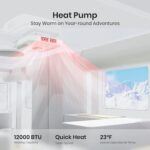
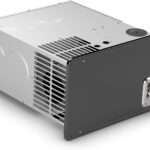
Are you trying to keep your cab or camper cool without running the engine or relying on shore power?


Product at a glance
You want a self-contained cooling solution that runs off your vehicle battery and keeps you comfortable during stops. This “12 Volt dc air Conditioner, rv air Conditioner Truck Engineering Vehicle Camping Van Excavator Agricultural Vehicle Trailer roof AC Unit Wall Mounted (12 volt dc air conditioner)” is designed to meet that need with a DC scroll compressor and vehicle-battery operation.
Key specifications
I’ll summarize the headline specs so you can quickly see whether this unit meets your basic requirements. These are the figures you should compare to your vehicle’s electrical system, roof mounting space, and cooling needs.
| Item | Specification |
|---|---|
| Product name | 12 Volt dc air Conditioner, rv air Conditioner Truck Engineering Vehicle Camping Van Excavator Agricultural Vehicle Trailer roof AC Unit Wall Mounted (12 volt dc air conditioner) |
| Voltage | 12V DC |
| Startup current | 60–80 A |
| Rated power | 750 W |
| Cooling capacity | ~8,875 BTU |
| Refrigerant | R134a |
| Refrigerant charge | 600 g |
| Modes | Energy-saving mode, Super mode |
| Suggested battery capacity (example) | 480 Ah for 6–8 hours in energy-saving mode |
| Suitable vehicles | Trucks, RVs, campers, vans, excavators, agricultural and engineering vehicles, boats, trailers |
12 Volt dc air Conditioner, rv air Conditioner Truck Engineering Vehicle Camping Van Excavator Agricultural Vehicle Trailer roof AC Unit Wall Mounted (12 volt dc air conditioner)
Performance and cooling power
You want to know whether the unit will actually cool the space you plan to use it in. The rated cooling capacity of approximately 8,875 BTU gives a realistic sense of what one of these units can handle in typical vehicle cabins or small camper interiors.
The 8,875 BTU rating is modest by residential AC standards but is appropriate for many single-cab trucks, compact campers, and enclosed work vehicles. In practical terms, you can expect effective cooling in areas roughly 50–150 square feet depending on insulation, ambient temperature, solar load, and airflow management.
- Cooling in shaded, insulated vans or sleepers: you should achieve comfortable cabin temperatures with moderate fan settings.
- Cooling in fully exposed, poorly insulated spaces under direct sun: performance will be reduced and auxiliary measures (insulation, shades) will help a lot.
Cooling capacity in real life
You care about how the BTU number translates to comfort at different times of day and in different climates. Expect quicker, more noticeable cooling during milder conditions, and slower, less dramatic temperature drops under extreme heat.
If you frequently face highs above 95°F (35°C), this unit will provide relief but may need to run longer or use “super” mode intermittently. Using insulation, reflective window coverings, and airing out before cooling will improve results and reduce runtime.
Modes: energy-saving vs super
You’ll find two main operational modes: energy-saving for overnight use and super for rapid daytime cooling. Energy-saving mode reduces compressor speed and overall power draw, giving you longer runtime on a fixed battery bank; super mode increases compressor frequency and fan power for fast cooling.
Use energy-saving mode while sleeping or when conserving battery is the priority, and switch to super mode during the hottest periods to bring temperatures down faster. The variable frequency control means the compressor can modulate, giving smoother temperature control across modes.

Power, battery, and electrical requirements
You need to ensure your vehicle can supply the startup and running currents this unit demands without risking battery damage. Startup current spikes of 60–80 A are common with scroll compressors and require appropriately sized wiring, fusing, and battery capacity.
Rated running power is roughly 750 W at 12V, which equates to about 62–70 A during steady running depending on system efficiency and mode. That’s a significant draw, so you should plan your battery bank, alternator recharge capacity, and charging strategy accordingly.
Startup current and running current
The initial current surge of 60–80 A can trip undersized fuses or voltage drop-sensitive electronics if not accounted for. Running current is lower but still substantial; you should plan wiring to handle steady currents comfortably.
Use wiring and breakers rated above the peak values, keep cable runs short, and ensure quality connections to minimize voltage drop and heat buildup. A dedicated battery with an isolator or smart DC-DC charger will protect your starting battery and manage charging while driving.
Battery sizing and expected runtime
Battery capacity directly affects how long you can run the unit off-grid. The manufacturer cites that a 480 Ah battery can power the unit in energy-saving mode for roughly 6–8 hours; that’s a practical example to guide your planning.
Below is a simplified runtime table using typical efficiencies and the unit’s 750 W rating to help you estimate runtimes for different battery sizes.
| Battery capacity (Ah, 12V) | Usable Wh at 50% DoD | Estimated runtime (hrs) at 750W |
|---|---|---|
| 200 Ah | 1,200 Wh (approx) | ~1.6 hrs |
| 300 Ah | 1,800 Wh | ~2.4 hrs |
| 400 Ah | 2,400 Wh | ~3.2 hrs |
| 480 Ah | 2,880 Wh | ~3.8 hrs (manufacturer claims 6–8 hrs in energy-saving mode — real-world may vary) |
| 600 Ah | 3,600 Wh | ~4.8 hrs |
Notes: These numbers are conservative and assume 12V nominal and only 50% depth-of-discharge for battery longevity. If you calculate using full usable capacity, runtimes scale up but shorten battery life. Energy-saving mode will lower draw and extend runtime; super mode will decrease it.
Battery protection and voltage control
You don’t want the unit to drain critical starting batteries or damage battery health, so voltage cutoffs and battery isolation are essential. The unit includes a battery voltage control system to protect against excessive discharge, ensuring the vehicle can still start.
Implementing a low-voltage cutoff, a battery monitor, and a dual-battery setup with automatic isolators or DC-DC chargers gives you the best protection. You should also include fusing at the battery based on cable size and expected current peaks.
Design, build, and installation
You’re likely considering whether this is a roof-mounted or wall-mounted solution and how it fits your vehicle. The product description indicates it can be roof or wall mounted and is suitable for a wide variety of vehicles from trucks and RVs to excavators and trailers.
Physically, this type of unit is bulkier than portable 12V coolers, so plan for space, mounting strength, and air distribution ducting if needed. Ensure roof structure can bear the unit’s weight and that you have weatherproofing materials for the penetrations.
Physical form: roof/wall mount options
If you’re mounting on the roof, you’ll get better airflow and exhaust placement but need a secure mounting flange and reliable sealing. Wall-mounted installations can be used in some camper layouts or service vehicles but require more planning for drainage and airflow.
Roof mounts will expose the condenser to outside wind and sun, which affects efficiency but makes drainage and heat rejection easier. Wall mounts may be preferable in factory-engineered enclosures where roof penetration is difficult.
Installation steps and tips
You want an installation that’s safe, waterproof, and electrically correct, so follow a methodical plan and consider professional help if you’re not confident. Typical steps include choosing the location, reinforcing the mounting surface, cutting the mounting hole, sealing, mounting the unit, routing drain lines, and connecting power via appropriate fusing and isolators.
Pay special attention to cable size and fuse location (within a close distance of the battery), use marine-grade sealants for roof penetrations, and verify airflow directions before sealing everything. Test the system while the vehicle is stationary and then while driving (with isolators and voltage protection in place).

Operation and controls
You want intuitive control over temperature and fan speed so you can tailor comfort and runtime to your needs. Variable frequency control smooths compressor operation and can improve efficiency and noise levels compared to fixed-speed designs.
Controls may include a simple keypad or digital controller; check whether the controller includes temperature setting, fan speeds, timers, and mode selection. Remote or wired controllers mounted inside the cabin let you adjust settings without climbing onto the roof.
Variable frequency control explained
Variable frequency (inverter) control means the compressor speed can ramp up or down to match cooling demand rather than cycling fully on and off. This gives you more consistent cabin temperatures and reduced short-cycling that can shorten compressor life.
You’ll notice quieter operation and smoother temperature control in energy-saving mode due to modulation, and faster response in super mode because the compressor can run at higher speeds as needed. This also tends to be more efficient under partial loads.
Recommended settings for different situations
For overnight use or when conserving battery, set a higher target temperature, lower fan speed, and use energy-saving mode. When arriving at a hot, parked vehicle, activate super mode briefly and then step down to energy-saving mode after the cabin reaches a comfortable level.
If humidity is high, use moderate fan speeds to allow the unit to dehumidify air effectively; running the fan too fast can reduce moisture removal and leave the cabin feeling clammy. Pre-cooling (venting hot air, closing blinds) makes the AC’s job easier and saves energy.
Noise, vibration, and comfort
You care about noise levels inside the cab at night or while you sleep. These DC rooftop/wall units tend to be quieter than older belt-driven or high-compression systems when running in inverter-controlled energy-saving mode, but fans and compressor activity will still generate sound.
Proper mounting with vibration-isolating pads and tight seals helps reduce transmitted noise. Additionally, insulating the cabin and using softer interior surfaces will absorb sound and reduce perceived noise levels.
Expectable noise levels
Expect moderate noise similar to a small rooftop residential unit or a quiet portable generator, louder in super mode and quieter in energy-saving mode. Inside a small cabin, the perceived sound can be more noticeable, especially at night, so use soft materials and proper seals to muffle it.
If you’re especially sensitive to sound, test the unit in person or monitor decibel levels when installed, and aim for mounting that isolates compressor vibration from the cabin.
Vibration and mounting considerations
Vibration can cause fasteners and seals to loosen over time, so periodic checks are necessary. Use lock washers, thread-locking compounds, and rubber isolation mounts where possible to maintain a secure installation.
Check mounting surfaces for fatigue over time, especially on older vehicles with thin roof skins, and reinforce as needed to prevent leaks and noise.
Refrigerant and maintenance
You’ll want to know about the refrigerant type, charging amounts, and ongoing service requirements. This unit uses R134a with a listed charge of 600 g; that’s a typical refrigerant for mobile AC systems and is widely serviceable.
Routine maintenance includes checking refrigerant pressure, cleaning condenser coils, ensuring drainage, and checking electrical connections. If you notice reduced cooling, higher amps, or ice on the evaporator, there could be a refrigerant or airflow issue that needs attention.
R134a refrigerant specifics and charge
R134a is a common refrigerant with established servicing protocols, so most HVAC shops can handle charging and leak checks. The 600 g charge is a full-charge figure; any loss of refrigerant suggests a leak that should be repaired rather than simply adding more refrigerant.
Keep in mind different climates affect refrigerant pressures; a qualified technician should adjust charge based on superheat/subcooling readings for peak performance.
Maintenance schedule and tips
Perform a basic inspection before each season: clear debris from the condenser, check drains, and inspect electrical connectors for corrosion. Every 1–2 years have a professional check refrigerant levels, compressor condition, and overall system health.
Maintain air filters and inspect duct work if fitted; replacements of condensate pans or seals may be needed over extended use.
Suitable vehicles and use cases
You want to know if this unit is right for your vehicle type. It’s intended to work with trucks, campers, vans, excavators, agricultural and engineering vehicles, ships, and trailers — basically any vehicle with a 12V system and space for mounting.
If you drive long distances daily with an alternator that can recharge batteries, this is a great on-stop cooling solution; if you spend long periods off-grid without a large battery bank or solar/charging system, you’ll need to size your batteries carefully.
Trucks, RVs, vans, campers
For sleeper cabs, small campers, and conversions, this AC gives you the ability to sleep comfortably without idling the engine. You’ll appreciate the no-engine-idling operation during rest breaks and the ability to run cooling while stationary.
Consider pairing with solar and a DC-DC charger for extended off-grid stays, and plan space for the inverter or control components if you add auxiliary charging sources.
Construction and agricultural vehicles, ships
In harsh work environments like excavators or agricultural vehicles, the unit provides worker comfort during breaks and can reduce heat stress. Marine applications require careful corrosion protection, appropriate draining, and professional attention to humidity control.
For machinery cabs with limited space, wall-mounted configurations or compact mounting strategies may be necessary.
Pros and cons
You should weigh the clear benefits against limitations to decide if this is the right buy. The main advantages are independent DC operation, variable frequency control, and compatibility with many vehicle types; drawbacks include significant current draw and the need for proper mounting and battery capacity.
Below are concise lists to help you balance the decision.
Advantages
- Runs from 12V battery so you don’t need shore power or to idle the engine.
- Inverter/variable frequency control improves efficiency and comfort.
- Super mode delivers rapid cooling when needed; energy-saving mode extends runtime.
- Wide vehicle compatibility, including trucks, RVs, and heavy equipment.
Limitations and what to watch for
- High startup and running currents demand substantial wiring, fuses, and battery capacity.
- Installation can be complex and may require roof reinforcement and professional help.
- Cooling capacity is modest compared to full-sized residential units, so insulation matters.
- Requires proper refrigerant charge and periodic professional maintenance.
Comparison with other 12V options and alternatives
You’re choosing among multiple cooling strategies: dedicated DC roof units like this one, portable 12V coolers, or traditional AC powered units. This unit sits between portable fans/coolers and shore-power-only rooftop ACs in terms of capability and independence.
Portable 12V coolers and evaporative coolers are cheaper and lower-draw but far less effective in humid heat. Traditional rooftop ACs requiring 110/220V or idling deliver more cooling but tie you to shore power or engine operation.
Versus traditional roof ACs that need engine or 110/220V
Compared to belt-driven or mains-powered roof ACs, you’ll trade raw cooling power for the convenience of battery-powered operation. If you need sustained, heavy-duty cooling in very hot climates, a mains-powered or engine-dependent system may be more effective.
However, for short stops and overnight use where you want to avoid idling or shore hookup, this DC unit is far more practical.
Versus portable 12V units or battery-powered fans
Portable 12V units are lightweight and cheap but rarely move enough air or remove enough heat to be comfortable in high ambient temps. This rooftop/wall-mounted DC AC will outperform portable solutions in cooling and humidity control but requires a much more robust electrical and mounting setup.
If you plan frequent camping in mild climates and want minimal setup, a portable cooler may suffice; for serious comfort in warm weather, the rooftop DC AC is worth the investment.
Installation cost and extra items to buy
You’ll need to budget beyond the unit cost for wiring, batteries, mounting materials, and possibly professional labor. Expect expenses for heavy-gauge cables, breakers, battery isolators or DC-DC chargers, reinforced mounting plates, sealant, and possibly a professional HVAC tech for refrigerant work.
Common additional items include: high-capacity deep-cycle batteries (or lithium bank), battery management system (BMS) for lithium batteries, isolator or automatic charging relay, heavy-duty fuse or breaker, cable lugs, and mounting hardware. Factor in labor if you don’t plan to DIY.
Estimated additional parts and wiring
Plan on heavy-gauge (e.g., 2/0 to 4/0 depending on distance and current) cables and a properly sized DC breaker or fuse placed close to the battery. Add a battery separator or DC-DC charger if you want safe charging while driving without draining your starter battery.
For rooftop installs, include a reinforced mounting flange, marine-grade sealant, and stainless hardware. For wiring and fusing, expect to spend several hundred dollars depending on battery and wiring specs.
Labor vs DIY considerations
If you’re comfortable cutting holes, running heavy cables, and sealing roofs professionally, you can save on labor; however, mistakes with refrigerant, electrical protection, or structural reinforcement can be costly and unsafe. Professional installers can ensure refrigerant charge, electrical protection, and leak-free mounting but will add labor charges.
If choosing DIY, consult wiring tables, use proper torque on electrical connections, and consider a refrigerant-certified technician for the initial charge and leak test.
Troubleshooting common issues
You’ll want to know how to quickly diagnose common problems like insufficient cooling or electrical faults. Start with basic checks: power presence, battery voltage, fuses, and airflow obstructions.
If the unit is running but not cooling sufficiently, check filters, ensure condenser coil is clean, inspect evaporator for ice, and verify refrigerant charge with a qualified technician. If you get frequent low-voltage cutoffs, check battery health and charging system performance.
No cooling / insufficient cooling
If the unit runs but cools weakly, inspect airflow first—blocked condenser fins, dirty filters, or closed vents can dramatically reduce performance. If airflow is fine, a refrigerant leak, undercharge, or compressor issue may be the cause; have these checked by a certified technician.
Also consider cabin insulation and solar gains; shading, window coverings, and venting before starting the AC can make a large difference in perceived cooling.
Electrical problems and protection
If the AC trips fuses or causes voltage drops, verify cable size and connection quality and ensure the battery can provide the startup surge. Persistent low-voltage cutouts indicate battery capacity or charging issues, not necessarily the AC unit itself.
Install a proper fuse near the battery, and consider a soft-start device if startup currents cause problems. Keep a multimeter and spare fuses on hand for quick checks.
Final verdict and buying recommendation
You want a clear take: is this unit right for you? If you need a DC-powered solution that allows comfortable cooling without running the engine or relying on shore power, and you can provide adequate battery capacity and proper installation, this unit is a compelling option.
It’s especially well suited to truck sleepers, small RVs, work vehicles, and any application where 12V independence is valuable. Make sure to budget for batteries, wiring, and professional installation unless you have strong DIY skills.
Who should buy this product
You should buy this unit if you value quiet, battery-powered cooling for rest stops and overnight parking, and you have or plan to install sufficient battery capacity and charging infrastructure. It’s ideal if you operate in moderately hot climates and want to avoid engine idling for comfort.
If your priority is maximum cooling in extreme heat or if you lack the electrical capacity and installation budget, consider alternative systems or combine this unit with expanded battery and charging options.
Quick checklist before purchase
Check these items before you commit: verify roof or wall space and structural strength, confirm your battery bank and alternator can support startup and running currents, and budget for professional installation if needed. Also confirm local service availability for R134a refrigerant maintenance and repairs.
If all checks pass and you plan for proper installation and battery management, this DC air conditioner can be a high-value upgrade to your vehicle comfort system.
Common questions you may have
You’ll likely have specific practical concerns before buying, so here are quick answers to frequent questions.
- Can my vehicle alternator recharge the batteries while driving? Possibly, but you should use a DC-DC charger or isolator to properly recharge auxiliary batteries without harming the starting battery.
- Is the refrigerant R134a serviceable? Yes, R134a is common and serviceable by certified HVAC technicians.
- How long will the compressor last? With proper installation, regular maintenance, and correct refrigerant charge, life expectancy is comparable to other mobile scroll compressors, but mileage varies with duty cycle.
- Can I run other 12V loads simultaneously? You can, but calculate total draw carefully to avoid exceeding battery capacity and to prevent deep discharge.
If you want, I can help you estimate battery bank size for your typical usage, suggest wiring sizes for your installation distance, or create a shopping list of parts you’ll need.

Disclosure: As an Amazon Associate, I earn from qualifying purchases.